
The calendar says it is winter, but temperatures are spring-like and North Carolinians are not the only one noticing. The official start of spring is marked by the Vernal Equinox on March 19, 2020 at 11:50 PM EST, but it seems Punxsutawney Phil got it right when he didn’t see his shadow.
Meteorologically speaking, winter is December, January and February. This is different than the astronomical season because meteorologists believe that keeping the same three-month pattern can reflect accurate climatological statistics when comparing seasons over many years.
Other WRAL Top Stories
So, where does Raleigh, NC stand when comparing our “winter” to previous winters?
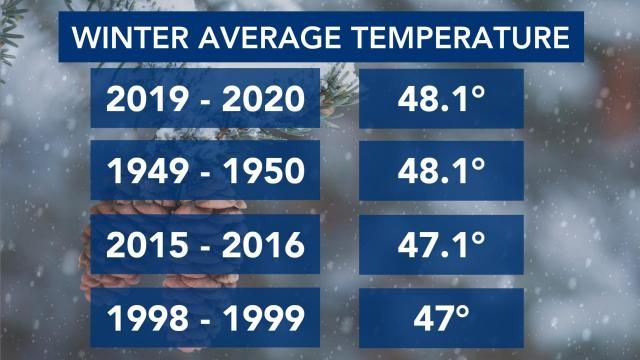
As of February 12, 2020, Raleigh’s winter average temperature is 48.1° - - making this winter tied for the warmest winter since temperature recordings began 76 years ago.
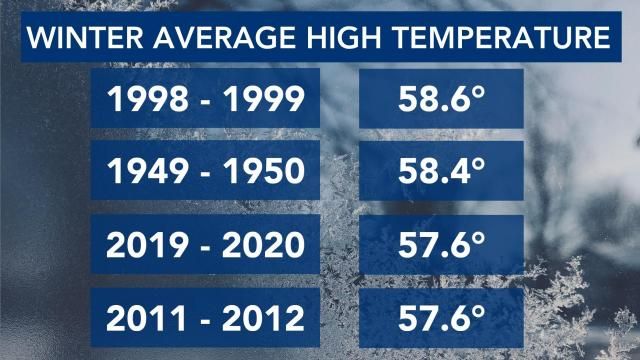
When comparing afternoon temperatures from December 1, 2019 to February 12, 2020, the afternoon temperature average for winter 2020 is third over the last 76 years.
The numbers above are not only affecting your view of winter 2020, but plants and animals are reacting as if winter is over. Signs of spring are everywhere. Trees are budding, birds are building nests and daffodils are emerging at Dorothea Dix Park.
The USA National Phenology Network (NPN) tracks the onset of spring and they say that spring is here and that it is the earliest arrival of spring on record.
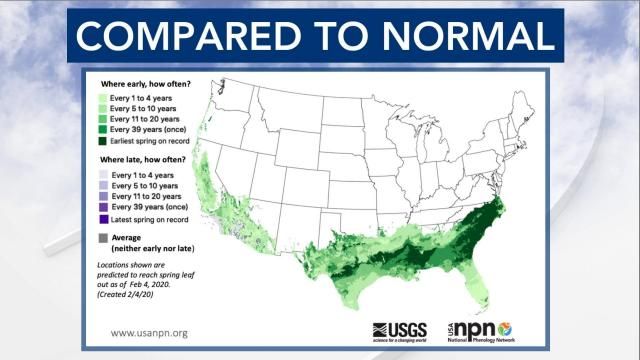
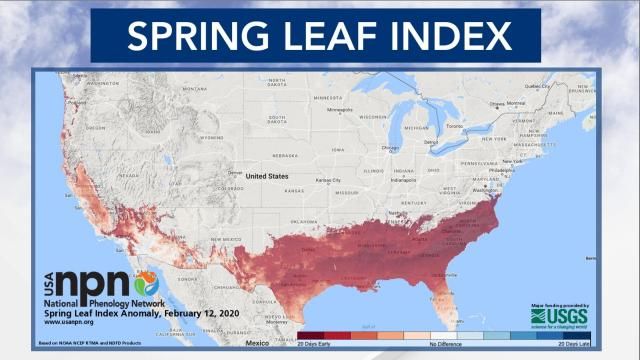
It is important to mention that the USA NPN classifies the onset of spring through the First Leaf Index based on the leaf out of some of the area’s trees. That index shows that leaves are arriving 20 days earlier than normal.
Animals, trees, plants and flowers all are responding as if spring has sprung and that it is here to stay. So is spring truly here? We will see, but it is important to remember that, on average, central North Carolina can still see freezing temperatures all the way through the first few weeks of April.