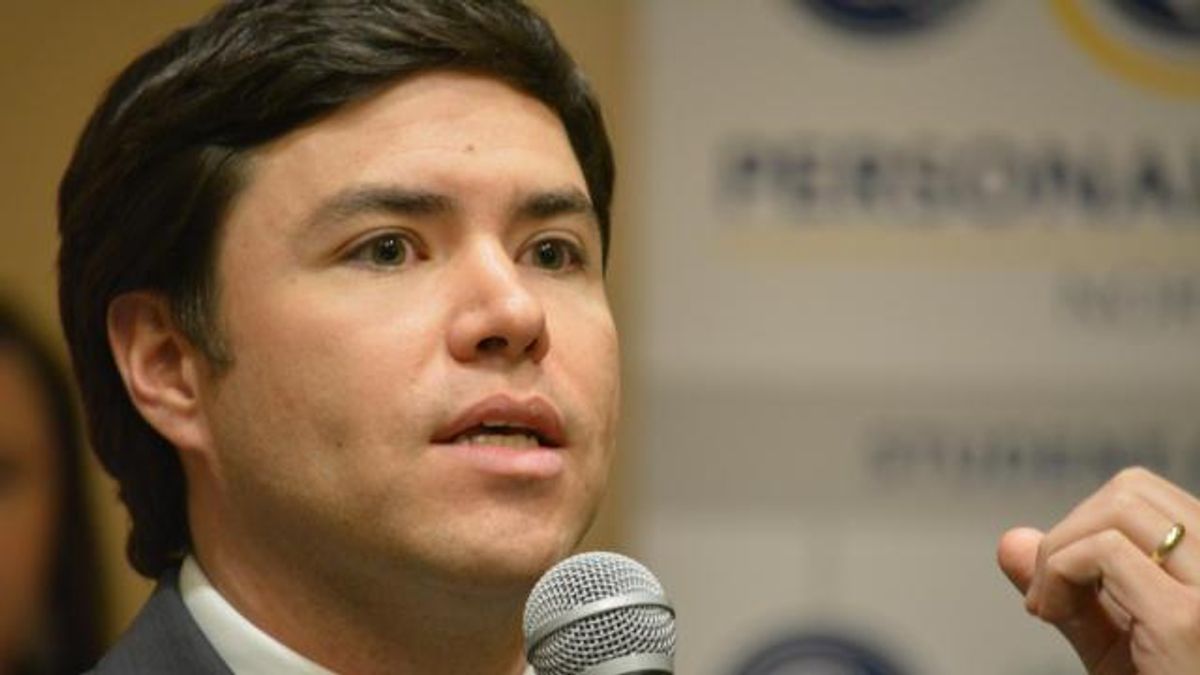
Two days after North Carolina Superintendent Mark Johnson surprised a Pitt County teacher with 100 iPads for her school, he sparred with State Board of Education members who questioned where he got the money to buy the devices and how he chooses which schools get them.
Johnson scolded the board during their monthly meeting Wednesday for questioning his iPad purchases, saying it was "quite a shame that we are sitting here having a conversation like this instead of celebrating the fact that we got more resources to classrooms." He credited his "fiscal conservative nature" for saving enough money in his superintendent's budget to buy 800 iPads for schools this summer.
Other WRAL Top Stories
Johnson's spokesman, Graham Wilson, told WRAL News that the "Office of the State Superintendent’s budget is what the state superintendent uses for staff, operations, and discretionary expenditures in support of public education in North Carolina."
"Every agency has an administrative fund, and the superintendent’s budget is one sub-unit within [the state Department of Public Instruction's] administrative fund. This is an historical practice that predates Superintendent Johnson," Wilson wrote.
Last month, Johnson announced he was sending 200 of the iPads to Ocracoke School, where flooding from Hurricane Dorian forced 185 students out of their building. On Monday, he surprised Junius H. Rose High School in Greenville with 100 of the iPads after math teacher Tracey Moore requested some for her class. Johnson has not announced which schools will receive the remaining 500 iPads.
State board Chairman Eric Davis asked Johnson how he selected the schools, and Johnson said it was because they contacted him and asked for iPads.
"How do we respond when the question is, 'Well, what criteria is used to make these awards and how does my school get into the queue to be considered for these awards?'" Davis asked.
"They can email me," Johnson said.
"That's the criteria?" Davis said.
The exchange prompted concerns from board Vice Chairman Alan Duncan who said there should be "some organized system" created by the state board and superintendent's office to determine which schools get the devices instead of relying solely on requests. That way, "we avoid the controversies that are inevitable as to how one got [iPads] and another didn’t," Duncan said.
Allowing the state board to get involved in those decisions would slow the process and create "bureaucratic paperwork checklists," Johnson said, adding that he should have a say in the board's spending priorities if they want to have a say in his.
"I think we’ll be careful to be fair and equitable about the precious resources of taxpayer funds," Duncan responded.
Johnson pivoted, using the opportunity to show what he sees as a double standard in how the board treats him versus his predecessor, former State Superintendent June Atkinson who lost to Johnson in 2016's election.
"Why was it fair and equitable for the state superintendent before to make decisions about sponsoring one professional development conference over another? Or paying for lunch for an entire group at a professional development conference?" Johnson asked board members. "How was that fair and equitable? That was under the leadership of this State Board of Education."
Johnson and the board have had a tense relationship since he was elected in 2016, and they battled in court for control of the state's $10 billion public school system. Johnson has previously described the board as a group of complainers who shift blame, lack accountability and avoid responsibility instead of fixing the state's "outdated" school system.
After his tense discussion with board members on Wednesday, Johnson abruptly walked to the back of the meeting room where reporters were seated and said the state board used the same funding in question to finance its lawsuit against him and the General Assembly when he became superintendent in 2017. He walked away before reporters could ask him any questions, but his spokesman later emailed more information to WRAL News.
"The same administrative savings in the Office of the State Superintendent’s budget from 2017 were used by the state board to pay their legal fees in their lawsuits against the General Assembly," Wilson wrote. "The state board spent more than $380,000 on 'legal payments.'"
Last year, Johnson bought 24,000 iPads for North Carolina's K-3 teachers with money from the state's Read to Achieve fund. He faced criticism after 2,400 of the devices sat in a state warehouse for a year, which he blamed on delays due to Hurricane Florence. Last week, Johnson's spokesman told WRAL News that all of the iPads have been distributed, but he has not provided details about which schools received them.