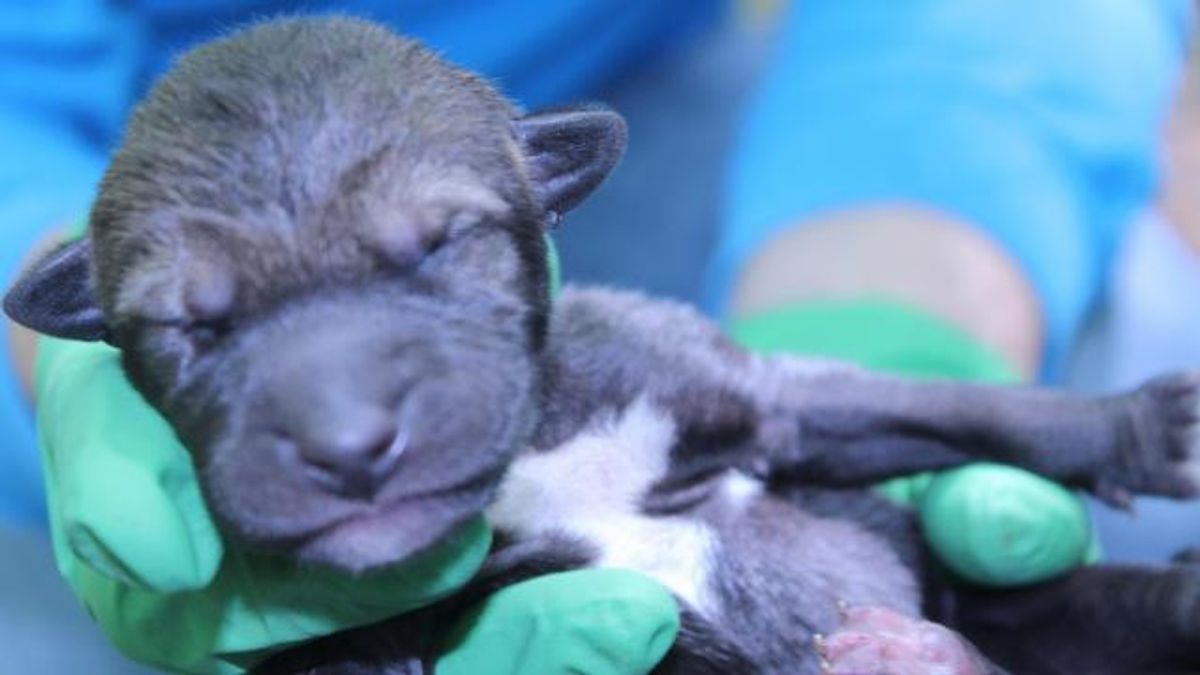
For the third year, the Museum of Life and Science has red wolf pups on its hands.
The Durham museum announced on Facebook that six pups were born Monday morning, April 22. All appear to be in good health and are inside the museum's red wolf habitat in its Explore the Wild exhibit, according to the museum.
Other WRAL Top Stories
Pups also were born at the museum in late April 2017 and 2018. The pups born in 2017, along with their parents, moved to the Wolf Conservation Center in New York in November 2017. Another red wolf pair took their place and gave birth to the second set of pups in 2018.
Those pups remain at the museum, along with their parents, who now have a much bigger family to care for. The family is now one of the only multigenerational packs of endangered red wolves in captivity nationwide, according to the Facebook post.
Once a top predator throughout the southeastern United States and one of only two apex predators native to North Carolina, the red wolf is critically endangered with captive and wild populations totaling less than 300 individuals.
“I am so excited. These pups are the future for this imperiled species,” said Sherry Samuels, director of the museum's Animal Department, in a news release. Samuels is also a management team member of the Red Wolf Species Survival Plan, a collaborative breeding and management program developed by the Association of Zoos & Aquariums to ensure the sustainability of endangered animal populations.
“It is going to be an amazing spring and summer at our wolf habitat,” Samuels said. “Watching these new pups grow up and interact with their older brothers and parents will be a once in a lifetime experience.”
The first 30 days are a particularly critical time for the pups, according to the museum, which will continue regular monitoring. Pups from the past two litters have died in the weeks after they were born.
Pups typically begin to open their eyes 10 to 14 days after they are born, but won’t spend much time out of the den until early June. Even then, the museum's newest arrivals might be difficult to spot; red wolves are notoriously shy and can be quite reserved around crowds and loud noises, the news release says. Museum staff will be present at the wolf habitat throughout the summer to answer questions and help guests stay calm, quiet, and observant.
Samuels shared these tips if you just can't wait to see the little ones:
- Practice the skills used by wildlife biologists observing these red wolves in the wild! Stay calm, remain quiet, and keep a close eye out – calm and quiet observation is key when viewing our new pups.
- Take your time and visit regularly. Pups will become more active over the course of the summer.
- Look for museum staff at the wolf habitat throughout the summer to answer questions and keep you updated on the latest development changes.