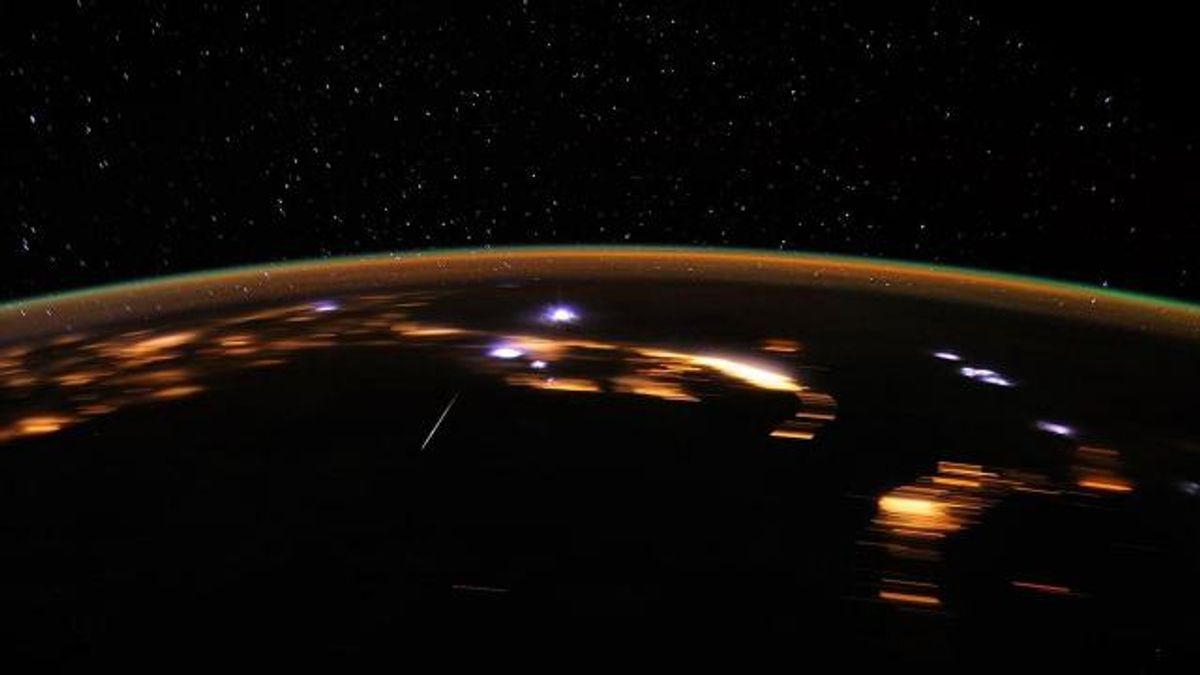
The Lyrid meteor shower is underway, but I wouldn’t both setting an alarm to get up early to see the show at its peak around an hour before sunrise Monday morning. Though clouds are expected to continue breaking up Sunday night, conditions will still be partly cloudy before dawn Monday.
The best time to see most meteor showers is in the hours before sunrise as the Earth rotates into the stream of debris left by the comet, in this case, C/1861 G1 (Thatcher), as it last passed through our part of the solar system. These dirty snowballs leave behind trails of ice and dust that burn brightly as they enter the atmosphere at speeds in excess of 100,000 miles per hour.
Unfortunately, the nearly full moon will light up the sky overnight making meteor spotting difficult.
We will have better opportunities to see Lyrids once clouds after clouds move out of the area on Monday. Look to the northeastern horizon before moonrise around 11:30 p.m. Monday or Tuesday before 12:30 a.m. Meteors will appear to be moving upward or to the north or east but no more than one or two per hour are expected from this moderate shower.
If you spot any meteors coming from the southeast, those are likely a sneak peak of the next meteor shower.
The eta Aquariids are active now but do not peak until the night of May 4, into May 5, just as the moon turns new making for a much better show. Rates of 10 to as many as 30 meteors per hour are expected with activity throughout that week.
Moon will make seeing Lyrid meteors challenging
The Lyrid meteor shower is underway, but I wouldn't both setting an alarm to get up early to see the show at its peak around an hour before sunrise Monday morning. Though clouds are expected to continue breaking up Sunday night, conditions will still be partly cloudy before dawn Monday.