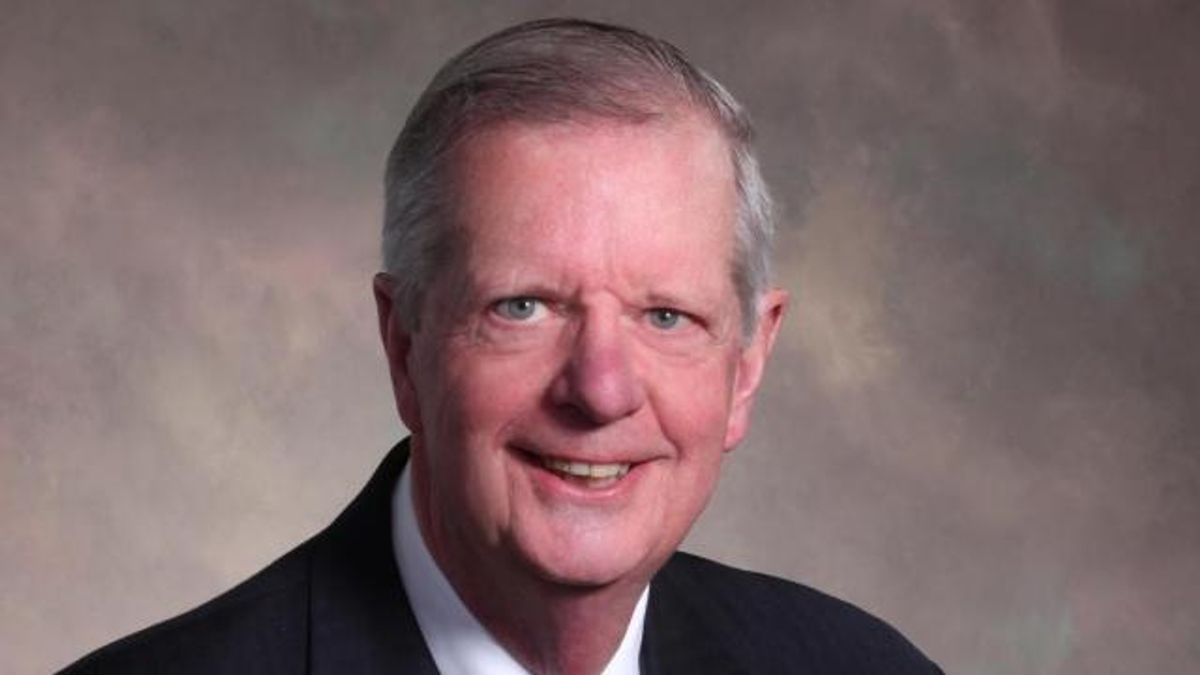
[Note: This is an abbreviated excerpt from a recent talk by Retired Pastor Art Ross. It was part of a monthly series I’ve organized on topics related to aging, held at White Memorial Presbyterian Church. In retirement, Art occasionally advises people on the subjects he discusses here.]
Do you really care what happens to you as you move close to death? If so, have a plan or ACCEPT that the state of NC or Wake County already has a plan waiting for you.
Other WRAL Top Stories
Every day in Wake County, countless people die who have no plan at all. EMS and social services kick in. The same is true if you go to the hospital without a living will, advanced directives or a MOST form. The hospital staff will take care of you using their protocols.
Friends, I’m going to tell you that it doesn’t matter how much money you have or how much insurance you carry, or who you know, when the hospital doesn’t have the legal documents stating your preferences, and the forms that authorize people you trust to make decisions for you, the hospital staff will makes the decisions that they are legally required to make.
My talk today is on ways to prepare.
First step - A five-people-you-can-call-after-midnight list. At least three need to be people who to live close enough to come on very short notice – immediately! Have their names and their phone numbers by your bed, on your refrigerator, in your bathroom – wherever you may become very ill or immobile, but could access a telephone.
For example - Three years ago, I started taking a medicine which had significant side effects on my body when no one else was home. I was having all the symptoms of a heart attack. I don’t like being alone, and scared, and sick - so I called a good friend from my list of five. “Come over here quickly.” He came over immediately, took a look at me and called 9-1-1. The EMS soon determined I wasn’t having a heart attack. Everything worked out fine, but I tell this as a way to ask, “Who would you call at 2 am – or 2 pm, if you were scared and sick?” By the way, my doctor lectured me when I told him of the of the incident. He said, “Call 9-1-1 first, open the front door so the EMS will not have to break in, then quietly sit or lie down and call anyone you wish!”
I got my doctor’s point. My point is that you that someone who knows you well, and knows where you keep all sorts of information, including medical information, a complete medication list, insurance information, and so on is of great comfort and immeasurable support – to you and to EMS.
If that is not readily available, then the EMS personnel are at a disadvantage. Here is a related piece of information: when EMS arrives, if you cannot speak for yourself, they will look on or in your refrigerator for important medical information. TODAY - tape a sheet of information marked EMS to the fridge today. List your doctors, your medications, your recent illnesses, and the people who should be contacted in an emergency.
Second step – Make a list of the people you trust enough to listen if the need to tell you things you don’t want to hear. Who would you trust to tell you it’s time to stop driving, or to move into a retirement home? Maybe those people on your Five Friends list Perhaps, the list includes others, who not close by.
For example: Recently, I had to ask a man who has been a good friend since 1968, on the request of his sons, to give me his car keys. He let me drive his car away. Other than my parents, I’ve had to take away two other sets of car keys. I even had to steal one car! – with the urging of other close friends.
In the recent experience, there was a level of friendship and trust that, even with the sadness, my friend just handed me the keys. Be grateful if you have that kind of friend, that you’ve built the kind of friendships that allow these kinds of conversations to happen, as sad as they are. Name the people you trust enough to tell you hard news, if you need to hear it.
Five friends to call after midnight, a shortlist of people who can tell you what you need to hear, when you need to hear it, and the third step I advocate is building relationships with the experts you trust to manage your affairs.
I learned this as my parents aged. My brother, sister and I had very little knowledge of their business affairs. My dad developed dementia, then Alzheimer’s. We asked our parents if we could meet with their doctors, lawyer and CPA, and let them tell us how we could be supportive. Those meetings turned into annual family events. At first, our parents trusted those experts more than they trusted us. their “experts” people started giving us “To Do” lists. We took notes and divvied up tasks. We had annual family meetings with those professionals for over twenty years. With their advice, we developed plans let us “bring their ship into harbor without it sinking.”
We now do something similar with our own family. The goal of family meetings is not to figure everything out. The goal is to open lines of communication that provide support and trust throughout the aging and dying process, and that contribute to healing on the other side of death.
What I am describing is not easy, and no two families work the same. However, what I’ve learned is that if you don’t get started now, you may never get started. Families are complex and dying is complex. Talking about this stuff is so important. Please hear me as being empathetic with the challenges a presentation such as this creates. What I know is that these kinds of challenges can create growing, grace-filled opportunities.
Now, I have a fourth step, an optional assignment, but a worthy idea.
Create an Emergency Information/ End-of-Life Folder – My wife and I have EMERGENCY INFORMATION folders that we leave on top of our desk every time we go on a major trip. The folders are in an easily accessible place near our desk at other times.
In the folder are instructions to our family should we die, copies of our living wills and our medical power of attorneys, a safety deposit box key, and cremation society contact information. There is everything that my pastoral experience has taught me that our family might need were one or both of us to die very suddenly on a trip or be in a situation where we can no longer communicate our wishes.
Each member of our family has a similar folder – but not with all the things I have in mine. First point – everyone, but especially older people, needs to have these documents – and second point – they need to be in easily accessible places.
I have even written my obituary. How compulsive is that? I have done this because I have watched families be thrown into disarray when death occurs. The funeral date cannot be announced until the obituary is prepared. Putting together an obituary that truly honors someone is not a task to be done at a moment of shock and grief with last-minute planning. I have told my family they can rewrite it, but at least they will have something to work from.
Am I too gloomy? YES! I am too gloomy. And, YES, I am also a REALIST!