Last week I was in Washington, DC, helping my first-born settle into his first home-away-from-home, navigate the metro, the bus lines, and other things related to his spring internship with the government.
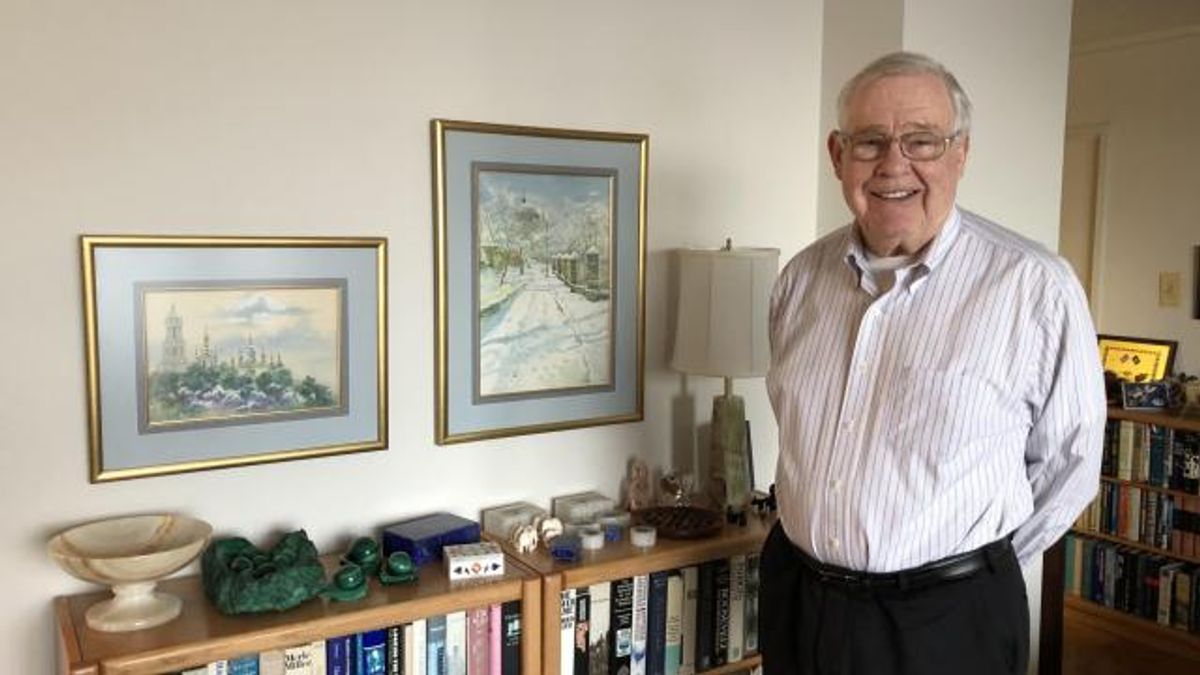
While it was nice to take a few days off to do this with Aidan, what was nicer were the three-hour-long dinners each night with my Godfather, Bob. The dinners lasted three hours not because we were eating our way through thirteen courses, but because Bob, who is eighty and still working full-time as the Executive Director of The Public Diplomacy Council, was so interesting to talk to.
Other WRAL Top Stories
“What if the government doesn't reopen while I’m here?” my 18-year-old son asked one night.
“What if it doesn’t?” Bob responded. “Four times during my career I was given an assignment in one country, then reassigned at the last minute to another. I don’t regret any of the places I landed.”
Over his 27 years with the US Information Agency, Bob worked in seven different countries on four different continents. For the last twenty, among other things, he has been working towards creating a diplomacy museum. Our dinner conversation easily shot, like a pinball machine, from what it was like to be in the front row for the negotiation of the reduction of nuclear weapons with the Soviet Union to the gentle ways the American Diplomacy Office rocked the boat of apartheid in South Africa before Mandela was released.
Diplomacy, Bob emphasized, is not achieved on a direct route from point A to B, but rather slowly constructed through wise and intentional and often less direct actions over time. Building diplomatic relations is not so different from building a good life.
During these dinners Bob wove in stories about the times life took him off-road so-to-speak. No one, he emphasized, is immune to the wrenches life can throw at you.
As someone in her fifties with an 18-year-old, Bob’s stories had the effect of injecting a little space into the metaphorical room—especially given the fact that Aidan had not followed the traditional route his peers had upon high school graduation. For that matter, after taking a sharp left turn into an entirely new career in my later forties, neither had I.
This kind of life and life philosophy had undoubtedly contributed to Bob’s physical and mental flexibility at eighty. Yesterday, after walking over ten miles with my son, we arrived at Bob’s metro stop on the red line -- Woodley Park -- to hear a collective groan as the passengers who spilled out from the train suddenly realized that the escalator – the equivalent of 342 stairs or about 25 flights of stairs – was not working. Aidan and I trudged slowly up. I was winded about two-thirds of the way. At dinner, I asked Bob what he does when this happens.
“I walk it,” he said.
It’s so common that as we age, we assume our worlds will shrink. We often become more rigid and easily rattled when obstacles present themselves. A neuroscientist might argue that this is simply to conserve our decreasing cognitive wherewithal for other things. But I took away something different and important from our time with Bob: It needn’t be that way.