North Carolina school districts on Wednesday refiled a lawsuit against the state over about $730 million state agencies owe to schools.
In 2008, courts found that the state Departments of Transportation, Health and Human Services, Environmental Quality, Revenue and Commerce, the University of North Carolina system and what was then known as the Employment Security Commission had kept money collected through fines and penalties for almost a decade that was required by law to go to public schools to pay for technology.
Other WRAL Top Stories
A decade later, $729.7 million of the $747.8 million judgment remains outstanding. Because the judgment would have expired next week, the North Carolina School Boards Association and 20 local school boards had to refile the suit.
"This lawsuit and the $730 million that the state owes the public schools is not about school boards, so don't think it's about us. It's about the students and their futures," Minnie Forte-Brown, president of the School Boards Association, said during a news conference.
The target statewide is one digital device per student, but most districts aren't even close to that ratio, she said.
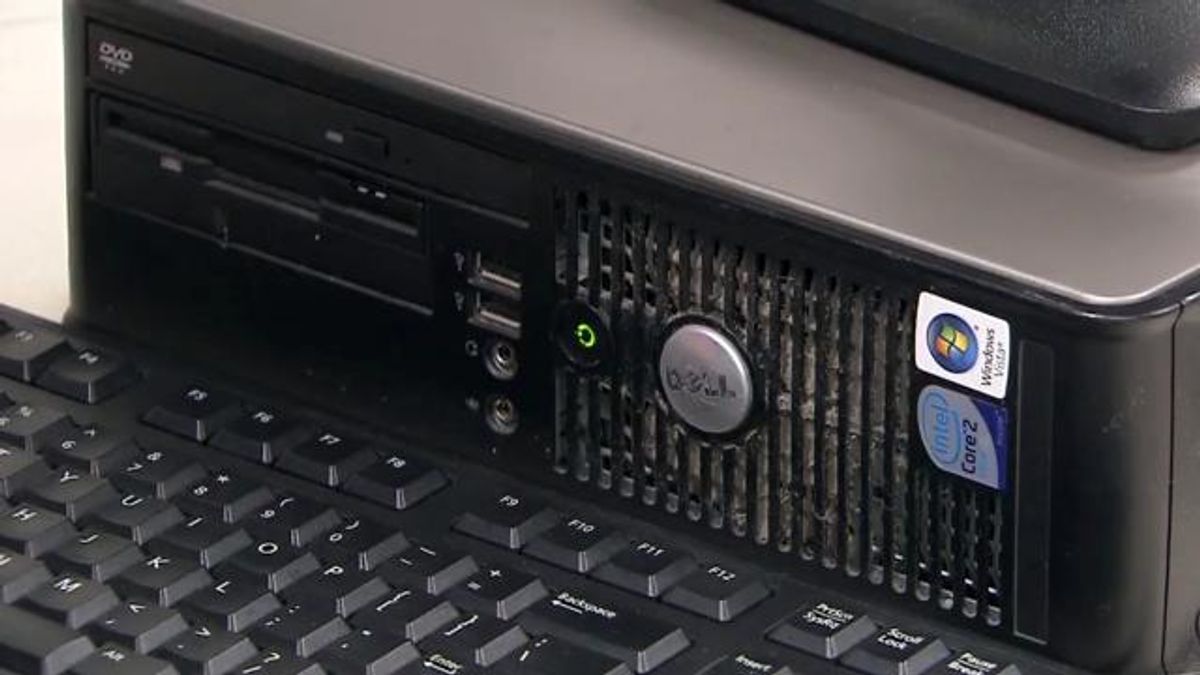
Forte-Brown, a member of the Durham County Board of Education, noted that 20 of 21 computers in the computer lab at George Watts Elementary School, a magnet school in Durham, are more than 10 years old – older than the students using them. Obtaining the money owed by the state agencies would be a big boost for schools like George Watts Elementary, where even the teachers laptops are outdated. she said.
"As a state, we have two choices: Invest in technology and have our students compete with the best and the brightest on a level playing field, or stick with the status quo and have our students potentially watching from the sidelines. I don't think we want the latter," she said.
"It's been a concern for a long time here at George Watts," agreed Jovonia Lewis, a former PTA president for the school, where her three sons attend. "We've been very limited with funding and resources on how to update the system and how to get computers and laptops or Chromebooks in every classroom. Every year, our PTA has given maybe three or four, but that's not nearly enough to cover for 400 students."
Durham Public Schools could get $15 million if the state pays the bill, Lewis said, adding, "I really hope that the General Assembly hears and responds with a speedy decision."
Leanne Winner, director of governmental relations for the School Boards Association, said the group has been trying for years to work with lawmakers to find a way to collect the money owed, but legislative leaders have not been responsive. The association sent a letter to House Speaker Tim Moore and Senate President Pro Tem Phil Berger in March, asking whether they would be willing to discuss a settlement, but it went unanswered, Winner said.
Spokesmen for Moore and Berger didn't say Wednesday why the letter received no response, choosing instead to blame Democrats for not paying the debt in 2008 and touting increases to education spending the Republican-controlled legislature has made in recent years.
Winner noted that, when the judgment was first awarded in 2008, the recession was just starting, so the school districts didn't push for payment. But the recession has been over for several years, and GOP lawmakers have banked more than $2 billion in the state's reserve fund and can afford to pay the districts what they're owed, she said.