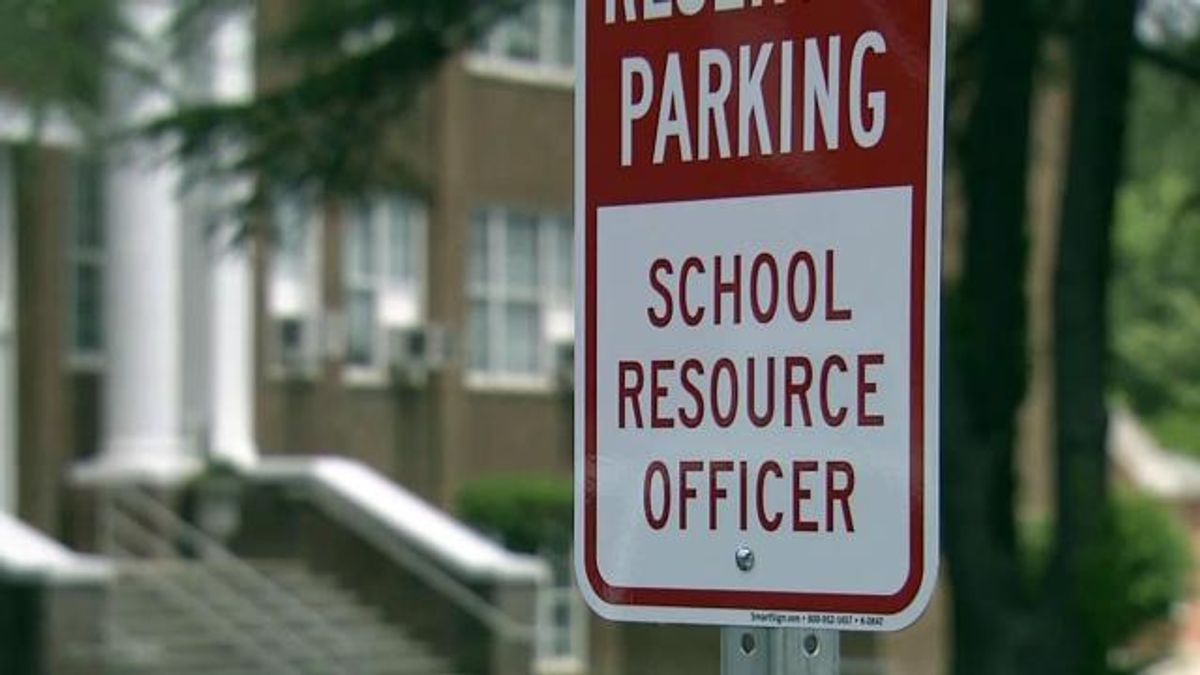
Legislation filed this week by four Republican state senators would let local school districts turn volunteer teachers into armed police officers with full arrest powers.
The teachers' names would be kept secret, and the bill contemplates as many as 3,000 "teacher resource officers."
Other WRAL Top Stories
School systems would decide whether or not to participate, and teachers who sign up would get police training and a 5 percent salary bump. The program would cost about $9 million in the first year and about $4.35 million each year after, according to the bill.
That funding isn't included in the state budget that lawmakers are expected to release in the coming days, and the issue didn't come up during a lengthy House Republican caucus meeting held Thursday to go over budget details, according to House Majority Leader John Bell. It also wasn't included in {{a href="blogpost-17577349"}}}a rundown of school safety proposals{{/a} General Assembly lawmakers rolled out Thursday, all of which may indicate the bill isn't likely to be implemented during this legislative session.
The bill was filed in the Senate, where it is sponsored by Sens. Warren Daniel, R-Burke, Ralph Hise, R-Mitchell, Dan Bishop, R-Mecklenburg, and Chuck Edwards, R-Henderson.
Daniel said Friday that the bill addresses two of the biggest problems with school security: The government can't afford to hire enough school resource officers to make schools safe, and even if it could, there wouldn't be enough applicants for those positions.
"One SRO in a school of 1,000 or 1,500 is just inadequate," Daniel said.
A spokesman for state Superintendent of Public Instruction Mark Johnson said that the superintendent's office was aware of the bill and is reviewing it, but he did not take a position on it. The North Carolina Sheriffs' Association, which has opposed arming teachers in general, hasn't taken a position on the bill, executive vice president and general counsel Eddie Caldwell said.
"But it is consistent with the position the association has taken before that no one should have guns in schools unless they are certified as a law enforcement officer," Caldwell said.
The North Carolina Association of Educators opposes the bill.
"We should be armed with resources to help our students be successful, like counselors, psychologists, social workers and school nurses," NCAE President Mark Jewell said in a statement. "We need fewer guns in our classrooms and communities, not more."
Teachers who sign up under the proposed program would go through training like regular law enforcement. It would be up to school districts whether the teachers carry open or concealed and whether they can lock their guns in safes at times, the bill states. They would be empowered to make arrests on campus or, if they chase someone away, off campus.
"A teacher resource officer, while in the performance of his or her duties of employment, shall have the same powers as municipal and county police officers to make arrests for both felonies and misdemeanors," Senate Bill 756 states.
Under the bill, teachers would apply for certification through the local police or the sheriff's department with jurisdiction over his or her school. If local law enforcement declines to participate, the school system can pursue law enforcement certification instead, the bill states. Participating teachers would have liability protection similar to a regular police officer.
Daniel said keeping their identities secret would keep bad guys from knowing whom to target and students from knowing where they might get a gun.
Regular SROs are often well-known at their schools and encouraged to get to know students. Often, their names and pictures are on school websites.