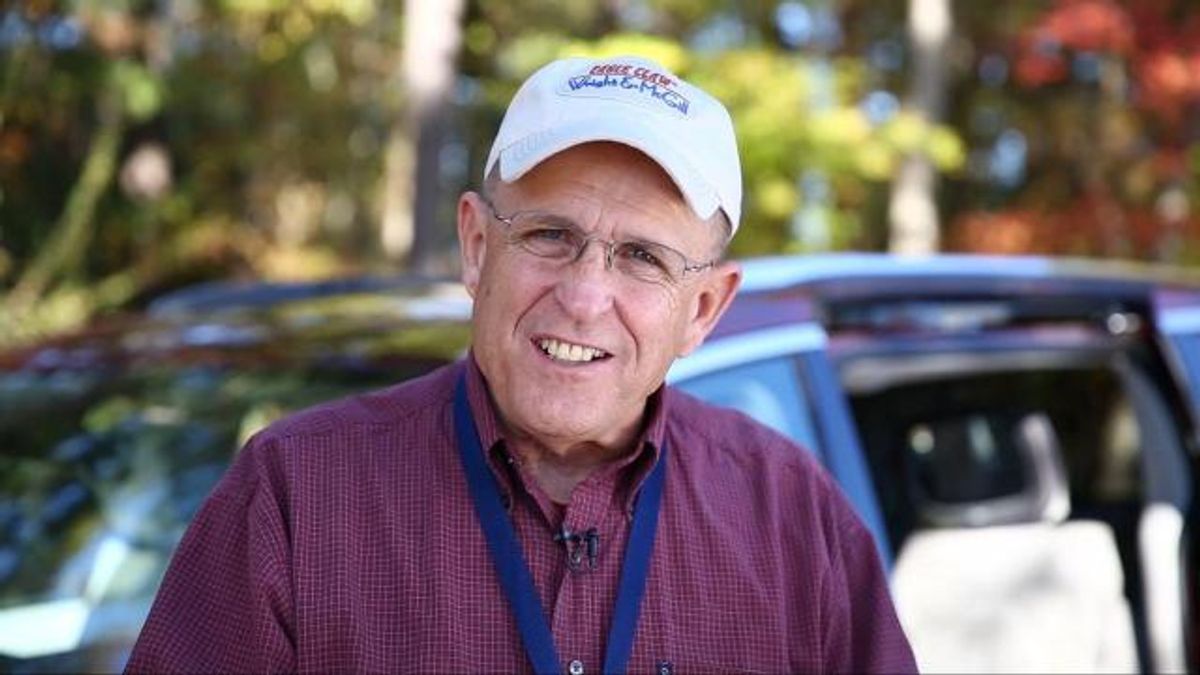
When he launched his career in law enforcement decades ago, Michael "Chris" Morris never imagined that he'd spend most of it helping new parents with their baby's cars seats.
In fact, car seats weren't widely used back in the 1970s when Morris started on the job after serving in the U.S. Army for four years. Child passenger safety, for his own three kids, all born in the 1970s, involved mom holding out her arm to brace them at a stop.
Other WRAL Top Stories
But the Safe Roads Act of 1985 changed the way we think about the safety of our kids in the car and the course of Morris's career. Today, the now great grandfather of three is the guy who has helped a couple of generations of Triangle families safely travel on the road with their kids in tow.
This month, Morris, who now is a child passenger safety technician for the University of North Carolina REX Healthcare, was named National Child Passenger Safety Technician of the Year by the National Child Passenger Safety Board. Morris traveled to San Antonio in April to pick up the award at the Lifesavers Conference, a national highway safety conference. He also won a monetary award from AAA.
Morris said in an interview that the other 40,999 child safety technicians across the country deserve the award as much as he does.
"I'm a humble fellow. I'm an old military guy," said Morris, who lives in Knightdale. "Why are they making all of this fuss? But I'm proud that I got it. My family is certainly proud that I got it. And the hospital is even prouder that I got it."
Two hours of training
Morris served in the U.S. Army for four years and joined the Raleigh Police Department in 1974. Four years later, he moved over to North Carolina's State Highway Patrol where he served as a trooper until his retirement in 2003.
In 1985, he took the opportunity to learn more about child passenger safety, completing a two-hour training class on car seats so he could help parents install the contraptions in their own cars.
"I took this job because I like children," said Morris, who raised three with his wife. "Children and old people are two of my favorites. Us in the middle can take care of ourselves."
He also enjoyed the one-on-one conversations with the families he worked with.
"It gave me an opportunity to interact more with parents who seemed more interested in what you say," he said. "I never knew it would escalate this far."
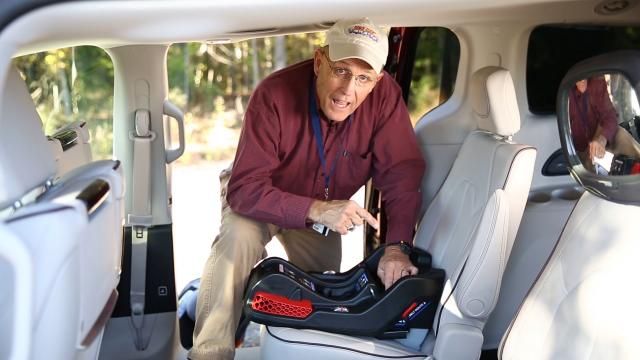
From two-hour to week-long classes
Today, the work it takes to remain up-to-date and knowledgeable about car seat safety and design requires more than a two-hour class.
"That escalated through the years to a two-day class, then a four-day tech class and then a week-long class," he said. "Now you have to get re-certified every two years."
Morris said constant changes to car seat and vehicle design force the lengthier training programs. In the beginning, there were only a couple of car seat choices - infant carriers for babies less than 20 pounds and 26 inches and seats for children less than 40 pounds and 40 inches.
"You didn't have any in between," he said. "Now all of that has changed. We have overlaps everywhere."
At the same time, in the early days, cars often were incompatible with the seats. It was difficult to even attach the seat properly to the car, he said. Today, new cars are required to include a LATCH system, which stands for Lower Anchors and Tethers for Children and is intended to make it easier for parents to install car seats (though it still can be confusing, as any parent can attest).
"Parents didn't know how to do it," said Morris of those early car seat installation days. "We were all learning together."
Even still, there's plenty of on-the-job training today.
"The seats change yearly, to be honest," he said. "You'll always find one or two that's different. You might see one and go six months and see the same one and then somebody comes up with a new one that you've never seen before."
Helping generations
At the State Highway Patrol, Morris spent nearly 20 years helping parents at the agency's Blue Ridge Road, Raleigh, location. When he retired in 2003, REX called to see if he might be interested in helping the hospital start a child passenger safety program there.
He took a month off to go fly fishing in Colorado, but, a few months later, he was on the job at REX. He works 9 a.m. to 1 p.m., weekdays, helping parents install their car seats. He also teaches monthly child passenger safety classes to parents. The programs are all free and open to the public. You do not need to be a patient at REX to see Morris or take his class.
Morris loves the work, helping bleary eyed parents, bewildered by the straps and latches that come with their baby's car seat.
And, these days, Morris is even getting recognized. After helping a new mom with her baby's child seat, the grandmother walked up to let him know that he had installed that new mom's car seat decades ago. The new grandmother had recognized Morris from his time as a trooper on Blue Ridge Road.
"I see the look on the mom and daddy's faces," he said. "They have no idea what they got. And then I see the look on their face when they leave. And what's so rewarding for me is they have trusted my talking to them and they've trusted me with their child."
UNC REX's child passenger safety program also recently took home another award this year. The North Carolina Child Passenger Safety Program named UNC REX as the 2018 Non-Permanent Checking Station Program of the Year at the North Carolina Traffic Safety Conference and Expo in Wilmington.
The free car-seat assistance and installations take place at REX Women’s Center, 4420 Lake Boone Trail in Raleigh. Inspection hours are 9 a.m. to 1 p.m. weekdays. Appointments aren’t necessary, but call 919-784-1802 before your visit to make sure a technician is on duty.
Stay tuned to Go Ask Mom later this week when Morris will share some of the common issues he sees when he helps parents install their child's car seats.
Go Ask Mom features local parents every Monday.