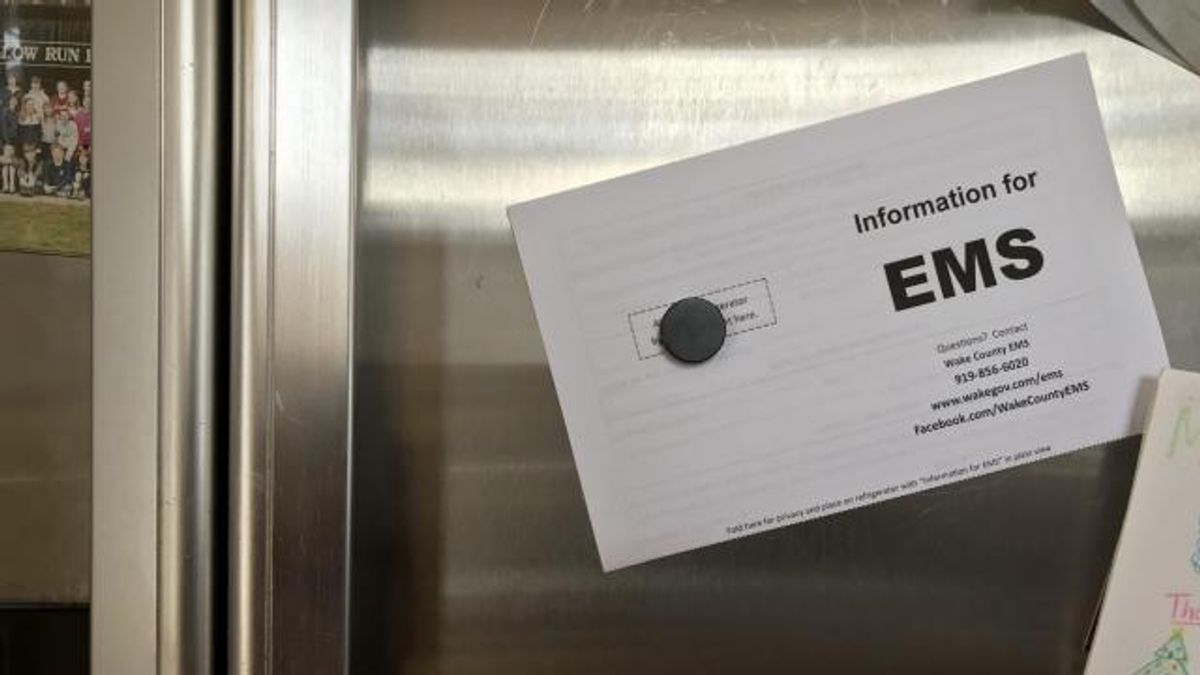
Your elderly neighbor takes a fall, hits her head and passes out. You call 911. When the ambulance arrives, a young paramedic asks, "Any medical conditions we should know about?"
You have no idea what to say.
Other WRAL Top Stories
According to NC Information Technology, 7.3 million calls were made to 911 in North Carolina in 2017 alone. (Over 100,000 were made in Wake County.) About 80% of 911 calls are medical emergencies. Of those, around half involve the elderly.
When emotions are heightened, it’s difficult to think clearly. If a person is unable to answer questions about their needs and wants, then EMS determines the best medical course of action based on limited information. But in some cases, a document with their medical history and medications may help to speak for them when they can't.
How can we, as adult children of fragile seniors, insure our parents or loved ones get the care they need in an emergency situation?
According to Assistant Chief Jeffrey Hammerstein of Wake EMS, put a copy of their important health information, such as important medical conditions, medications, their physician or emergency contact number, on the fridge. That's the first place EMS looks. Wake County provides a one-page template here.
Hammerstein added, "If you go online, you’ll see that there are a lot of different brands—like Vial of Life. The bottom line is it doesn't matter what brand you use. Just use one."
"In Wake County, we run 280 calls/day—most to homes. It is not the norm to have that info on the fridge, but it sure can be a life-saver, especially if someone is sick enough that they can’t communicate well. If the information is not readily available, sometimes we have to go looking for it, which can take time and may still leave us without everything we need to know. If their situation is urgent, EMS will move ahead with treatment and transport to the hospital. In some less-urgent situations, it's really helpful if we can give their doc a call. Having that contact information at our fingertips can be quite valuable."
"It’s important to know," Hammerstein added, "that the typical emergency transport costs over $500. The average out-of-pocket cost for an EMS transport is $367. Factors which contribute to the cost include the category of service provided and whether the patient is transported to the ED. Here is information which breaks down the cost."
Mr. Hammerstein also mentioned the EMS Fund, a subscription program which, for $60/year covers EMS costs for the whole household. Even one visit makes the subscription fee well worth the cost. See here for more information.