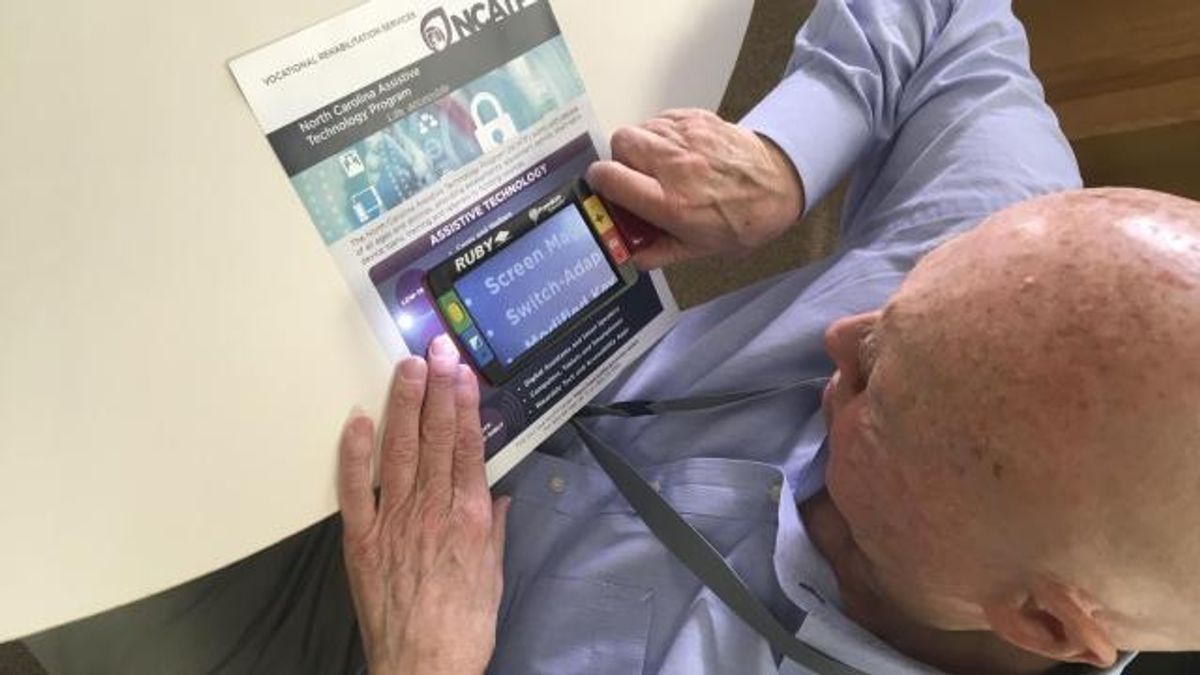
Not long ago, a 95-year-old client of mine who lives in Assisted Living, mentioned that he had recently seen someone using a portable magnifier with a flashlight to read the lunch menus. My client is incredibly well-read, which makes the fact that his eyesight is declining all the more frustrating. We borrowed his neighbor’s magnifier to test out, but it didn’t work so well for him. I found similar products online, but the costs ranged from $300 to $800.
“I can’t spend that much if I’m not even sure it will help,” he said glumly.
Other WRAL Top Stories
Then I remembered the North Carolina Assistive Technology Program. Ten years ago, when my son was first diagnosed with severe dyslexia, he and I had gone there to see if they had any tools that might help him in school. (They did.)
The NCATP is a state and federally funded program that was established to carry out the federal Assistive Technology Act of 1998. They have nine offices across the state, stretching from as far west as Sylva to as far east as Greenville. Each office has an impressive library of equipment to assist with all kinds of needs, including hearing and visual impairments, motor and learning differences, communication disorders, mobility issues and memory. Centers are similar although not identically equipped. A strict inventory of thousands of assistive technology is kept at each center. Because they are manned by only one or two staff members, visits are by appointment only.
I made an appointment for the following Friday with Lynne Deese, assistive technologist with the Raleigh Center. The Raleigh NCATP is located at the Department of Health and Human Services. To make an appointment, one must call the center near you. Equipment demonstrations generally last about an hour and are a free service offered to all NCATP consumers. Other services, like fee for service assessments, can last 2 hours or more.
My client and I pulled up to the dark brick entrance and checked in with the receptionist. Moments later Lynne led us down a long corridor which opened into a large, well-lit room, with stations lining the walls and metal racks displaying equipment for all kinds of needs. For the thousand or so seniors that the Raleigh Center serves, the overwhelming majority have issues with activities of daily living, such as dining, grooming, cooking, and writing. Not all tools are high tech, though they do have devices that can augment the functions available on standard hearing aids and technology for low vision and blindness.
During our equipment demonstration session, Ms. Deese asked questions about my client’s needs, identified potential tools, demonstrated how to use them, and even allowed me to check a piece of equipment out for as long as two weeks to see whether it was useful enough to warrant purchasing it. NCATP does not sell equipment, but they can point you to sources of used equipment.
After testing a magnifier called the Ruby and two different sizes of another magnifier called the Zoomax Snow, my client decided he’d like to borrow the Ruby. We filled out some paperwork and left with a loaner. It did what he needed it to do. My client ended up buying a used one from a highly rated seller on Amazon. He can read menus now, as well as the newspaper when he’s in the dining room waiting to be served. In other words, this tool gave him a little independence back. And this Center might give you some gift ideas to help a senior you know as we head into the holiday season.
Between October 1, 2015, to September 30, 2016, the NCATP helped 19,662 persons (approximately, 1000 were 65 or older).
Questions regarding the NC Assistive Technology Program (NCATP) should be directed to Tammy Koger, Director. For more information on services provided, please visit the NCATP website.