Remember when we were little and we didn’t finish our dinner and our parents told us there were children starving in other parts of the world? Well, they were right. Children are starving in other parts of the world as well as here in our own country. As adults, we know this intellectually, but it’s another thing to see it in person.
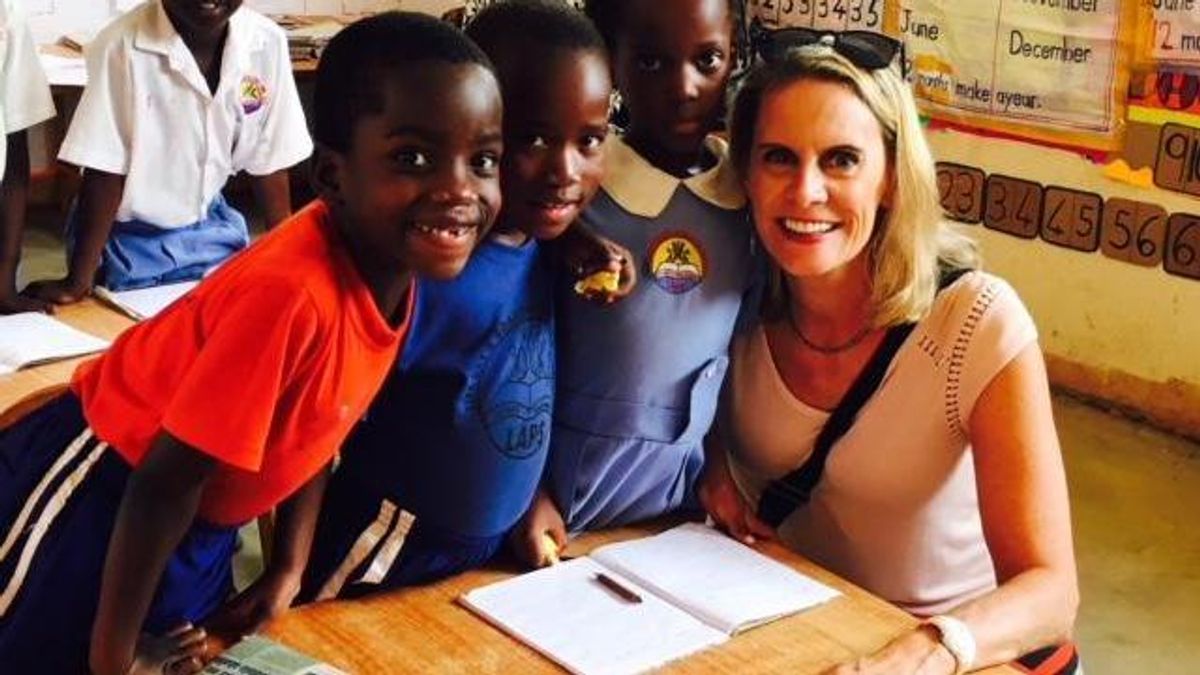
Last week, I was in Uganda where I'd traveled with a team from Duke's Division of Global Neurosurgery to see them perform life-saving and life-altering medical procedure. There, I saw poverty like I’ve never seen before in my life. People live in substandard housing, small concrete homes with no indoor plumbing, often no electricity, and the only food source they have is what they grow or what they can barter for.
Other WRAL Top Stories
During some of the major traffic jams we experienced, young children, five and six years old, came up to the window of our taxi begging for money. They were barely tall enough to see inside the car, and traffic was whizzing around them. There were no parents in sight. The mother inside of me shuddered every time one of the motorcycles, known as Boda Bodas, came within inches of hitting them.
We visited the Children’s Life Ministries Orphanage and School in Seeta, outside the capital city of Kampala. It is home to nearly 900 children. Half of them orphans and the other half come from families who cannot afford to educate and care for them.
They live modestly - 14 children to a small house with a “house mother,” no running water and few modern amenities. But they are happy — they smile, they dance, they sing, they speak respectfully to adults and say “thank you” for anything they are given. In other words, their joy does not stem from having things, but instead, from having love.
So, when I returned this week to the usual complaints of two teenagers in my house, it struck me how little our children know about what it’s like to go without. As one of my girlfriend’s pointed out the other day, the words “makeup” and “emergency” should never be used in the same sentence. Yet that sentence was recently uttered in my house. What constitutes an emergency to middle class suburban children isn’t even in the realm of what children experience in developing countries.
How do we teach our children these lessons without actually taking them to a place like Africa? We begin at home.
Every year I say this, but this year I am making it a reality. We will volunteer on Christmas day as a family to serve food to those who are less fortunate. And we will not pile our tree high with gifts for one another that we do not need. Instead, we will look for opportunities to help others.
You don’t have to go 7,300 miles, a quarter of the way around the world, to realize how lucky we are. But it sure gives you perspective - one that I hope stays with me.
Amanda is the mom of two, a reporter for WRAL-TV and the author of several books, including some on motherhood. Find her here on Mondays.