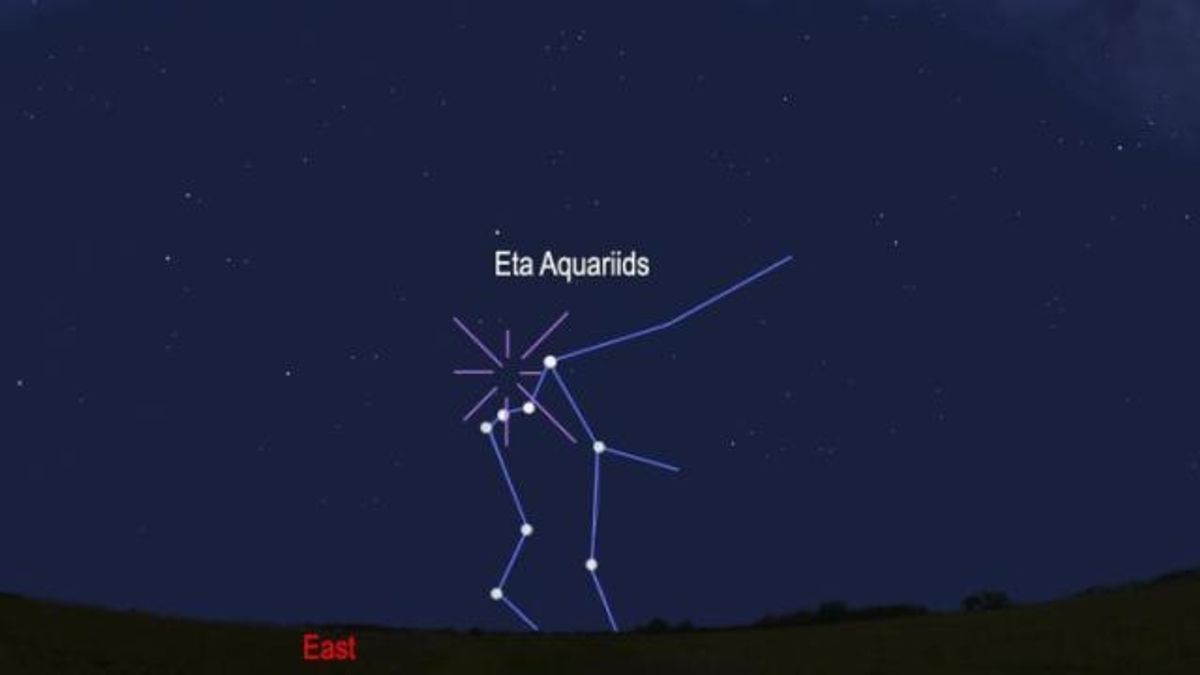
The Eta Aquariids meteor shower is visible this week. It is created by debris from Halley’s comet as it last passed through the solar system in 1986. The comet’s path crosses Earth’s orbit twice creating the Orionid meteor shower in late October as well.
Meteor showers are named for the constellation, or in this case the seventh brightest star in the constellation Aquarius the Water Bearer that they appear to emanate from. As dust left behind by the comet enters Earth’s atmosphere, friction heats particles as fine as a grain of sand producing streaks of light across the sky.
Other WRAL Top Stories
Ten to 15 meteors per hour are expected for viewers in the Northern Hemisphere. The best time to look is between 3:30 and 5:30 a.m. before morning twilight. Look to the east to the Y-shaped upper portion of Aquarius the Water Bearer just above the horizon. If you aren’t an early riser, wait at least until after 1:30 a.m. for the first quarter moon to set for the best view. Viewing will depend on sky conditions, of course, and broken clouds are expected to continue overnight.
Meteors may be seen for another week, but Earth passes most deeply through the comet’s path early the week of May 5.
Meteor shower peaks remaining in 2014:
- Camelopardalids: Night of May 24, thin sliver of a moon should make for good viewing
- Perseids: Night of Aug. 12, the nearly full moon visible all night is expected to spoil what is usually one of the better meteor showers of the year
- Orionids: Night of Oct. 21, new moon should make for good viewing of the expected 20 meteors per hour
- Leonids: Nights of Nov. 16-17, Earth won’t orbit through the densest part of the debris trail of comet Tempel-Tuttle until 2099, until then no more than 10 per hour should be expected.
- Geminids: Night of Dec. 13, expected to be the best meteor showers of the year with 60+ meteors per hour that not even the last quarter moon can spoil
Tony Rice is a volunteer in the NASA/JPL Solar System Ambassador program and software engineer at Cisco Systems. You can follow him on twitter @rtphokie.