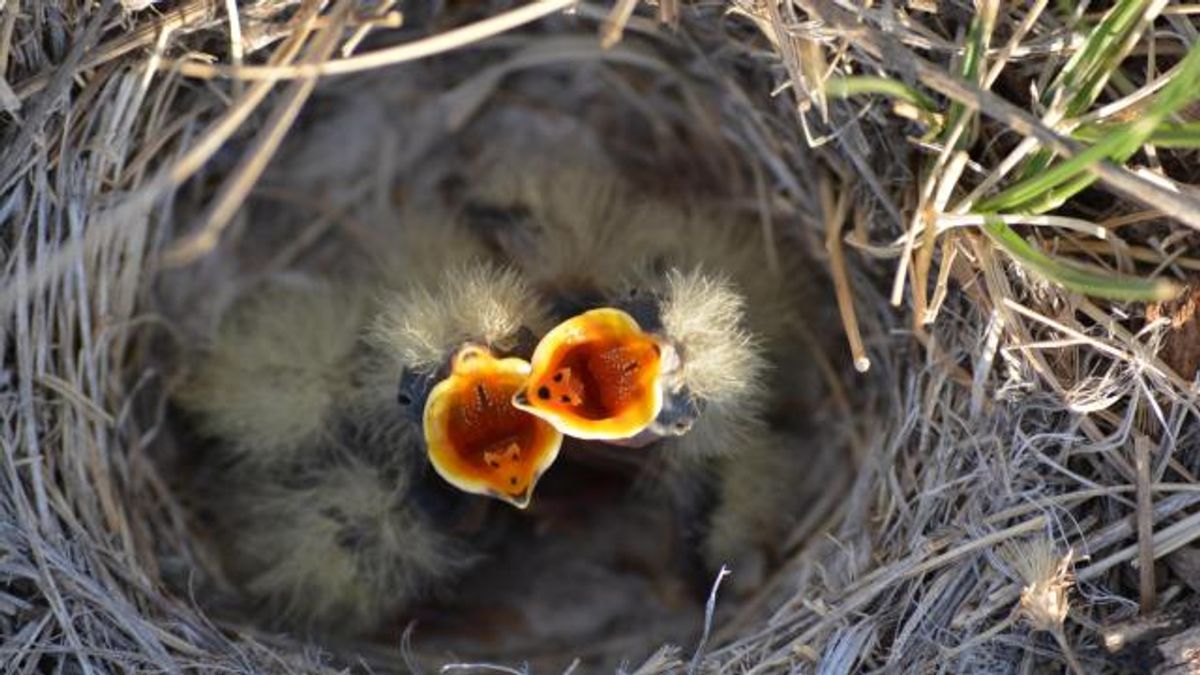
When the N.C. Museum of Natural Sciences put out a call for baby bird pictures last week on Facebook, the thread of comments eventually totaled in the hundreds. Fans shared pictures of blue robins' eggs, squawking house finches and tree swallows.
Other WRAL Top Stories
Those colorful eggs and tiny birds popping up across the region are enthralling families stuck at home. On the museum's Facebook page, one mom shared that her girls enjoy checking in the baby birds in their yard daily. Another shared a photo of a young girl gently holding a baby. And, in Apex, a dad set up a livestream of a robin's nest for the world to see.
So what should you do if you find a nest of baby birds at your house? How long does it take for them to hatch? And is it OK to actually hold one?
We checked in with Brian O'Shea, collections manager for ornithology with the natural sciences museum, to get some expert advice.
When is baby bird season?
"We're right in the middle of it," O'Shea said. "The season is spring. Spring into summer."
Some birds nest as late as August, but May is the time when nests start popping up. Baby birds love to eat insects, so the breeding typically depends on how abundant insects are. Migratory birds, who don't arrive until late April or early May, usually don't breed until closer to June, he said.
How long do baby birds take to hatch?
It depends on the species, but it usually takes about 10 days to two weeks for the birds to hatch. After hatching, they enter the fledging period when they learn how to fly and are most vulnerable, O'Shea said. During this fledgling period, they usually jump and flutter down to the ground or climb out of the bushes as their parents hover nearby.
"The first day that they're out of the nest is probably the most dangerous time of a bird's life," he said.
Within a month, they typically have the skills to fly away.
What should I do if I find that a baby bird has fallen out of a tree?
While some baby birds may actually fall out of a tree, it's likely most are simply in that fledgling stage. It's best, said O'Shea, to just leave it alone. The parents have it covered.
"Birds are highly invested in caring for their young," he said.
In some situation, you may need to help the bird get to a safe place. For example, if it's sitting next to the tire of your car. Otherwise, just let them be.
But if I touch a baby bird, won't its parents not take it back?
That's another myth, O'Shea said. "Birds do have a sense of smell," he said. "In most species, it's not particularly well developed."
There's no evidence, O'Shea said, that any kind of human touch will trigger birds to abandon their babies.
What percentage of baby birds survive?
Birds don't have great odds as they face a fair amount of predators. About 60% to 70% of nests will not survive. And, said O'Shea, it may be higher in urban and suburban areas.
Can I touch a nest with eggs?
O'Shea cautions against it. "Birds are more likely to abandon a nest if there are eggs than if the young have already hatched," he said.
Why? It might be because if a nest with eggs has been touched or moved, the parents may think that it's been found by a predator and isn't going to survive, so they might as well try again in another place.
How can I help my kids enjoy the bird's nest in our yard?
It's fun for kids to be able to look, O'Shea said. But, if you do find a nest, it's important to not disturb it too much when the babies are still inside it.
"You don't really want to be bothering the birds too much when they are in that stage," he said. "And when the young are a lot older, there's a risk they could fledge prematurely if you disturb the nest. They may fledge a day or two early, and they will be very vulnerable."
How can I attract more birds to my yard?
Native plants will help attract more insects to your yard, which means they'll be more likely to find a home in the bushes and trees, O'Shea said.
For kids who are really excited about birds, check out these sources online: