Friday marked 30 years since an industrial accident in North Carolina that led to changes in workplace safety rules nationwide.
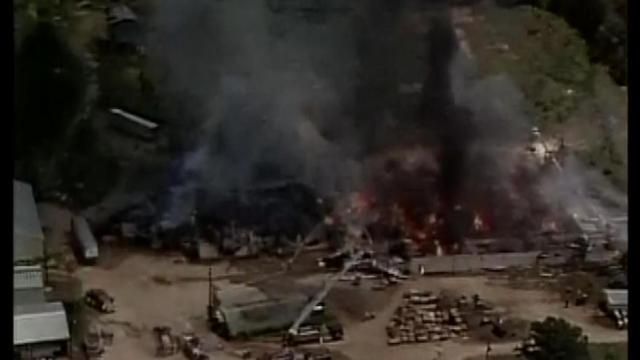
In 1991, a fire broke out at the Imperial Foods plant in Hamlet. At least two doors were locked and trapped people inside. Twenty-five people died, while 54 more people were injured trying to escape.
Other WRAL Top Stories
For Annette Zimmerman, it's been "30 years of tears."
Somewhere on the grounds of the plant, Zimmerman laid on the ground -- stepped on by coworkers running for their lives.
"Thirty years of pain [and] 30 years of anguish," said Zimmerman.
The fire began when a ruptured hydraulic line inside the Imperial Foods chicken processing plant ignited a massive grease fire. The plant was a death trap with at least two of the exit doors locked from the outside.
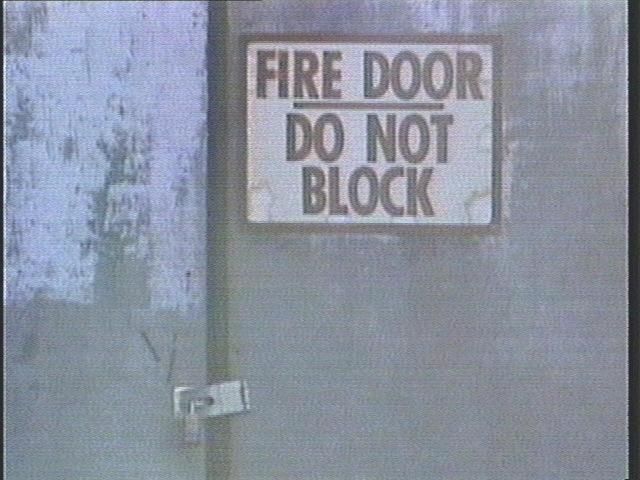
Zimmerman said the doors were locked because managers thought workers were stealing chicken.
"[I was] just stopping by to talk to somebody about the weekend, hearing the women scream and opening the partition and seeing this black ball of smoke coming right at me," she recalled.
"I almost, but by the grace of God, went into the freezer where 12 bodies were found," added Zimmerman.
Zimmerman said someone picked her up and carried her to safety. Since that day, she's had two lower back surgeries and four neck surgeries, with another to go.
"We have all suffered in some way," said Zimmerman.
The building had no sprinkler system or evacuation plan.
"This site is hallowed ground. The horrors of that day ... you never forget them," said Hamlet Fire Chief Calvin White. "The horrors on the people's faces that had to go in that building and search it. It made a mark in this community that will never heal."
"Sept. 3 was the most tragic day in the history of Hamlet," said state insurance commissioner Mike Causey.
Thirty years later, community members came to the grounds of the plant to remember. The building is long gone, and in its place a granite marker and 25 crepe myrtles.
John Drescher, a longtime journalist who covered the tragedy, said that 30 years of workplace safety data shows North Carolina going in the wrong direction and in danger of forgetting the lessons of Hamlet.
"As the time goes on, memory fades, but there are some real danger signs," said Drescher. "This was an entirely preventable tragedy."
Drescher, who covered the fire for the Charlotte Observer, now writes for an online publication called The Assembly.
He said that while state fire codes are tougher, the state has 25 percent of its 117 workplace safety inspector jobs vacant.
“The number of inspections in the last decade is down more than half," said Drescher.
Causey said during Friday's ceremony that things are better now, and that the state vows to never let what happened at Hamlet happen again.
"It changed forever how the state looks at safety and inspections," said Causey. "They nearly doubled the number of inspectors just like that. Sixty inspectors to 114."
"This event pushed the North Carolina fire code forward ... to do everything we can to prevent a tragedy from happening like this again," said Chief State Fire Marshal Brian Taylor.
The Hamlet tragedy also caused fire code to require businesses to be inspected every one, two or three years, according to Drescher.
"The fear is that, if you don't remember these things and you don't actively work to prevent them, then they could happen again," he said.
For Zimmerman, being on the grounds during the ceremony brought back painful memories.
"I'm trying not to go into shakes being on the grounds because it causes me to be a little nervous. That's just how real it is -- still to this day," she said.
Emmett Roe, the owner of Imperial Foods, pleaded guilty to 25 counts of involuntary manslaughter. He was sentenced to 20 years in prison but was paroled after four. He died in 2018.