This week we’ve enjoyed a number of spectacular International Space Station (ISS) passes. It’s great to watch the bright dot moving from horizon to horizon knowing there are three Russians, twp Americans and a German all doing science and generally getting along better than we seem to here on Earth.
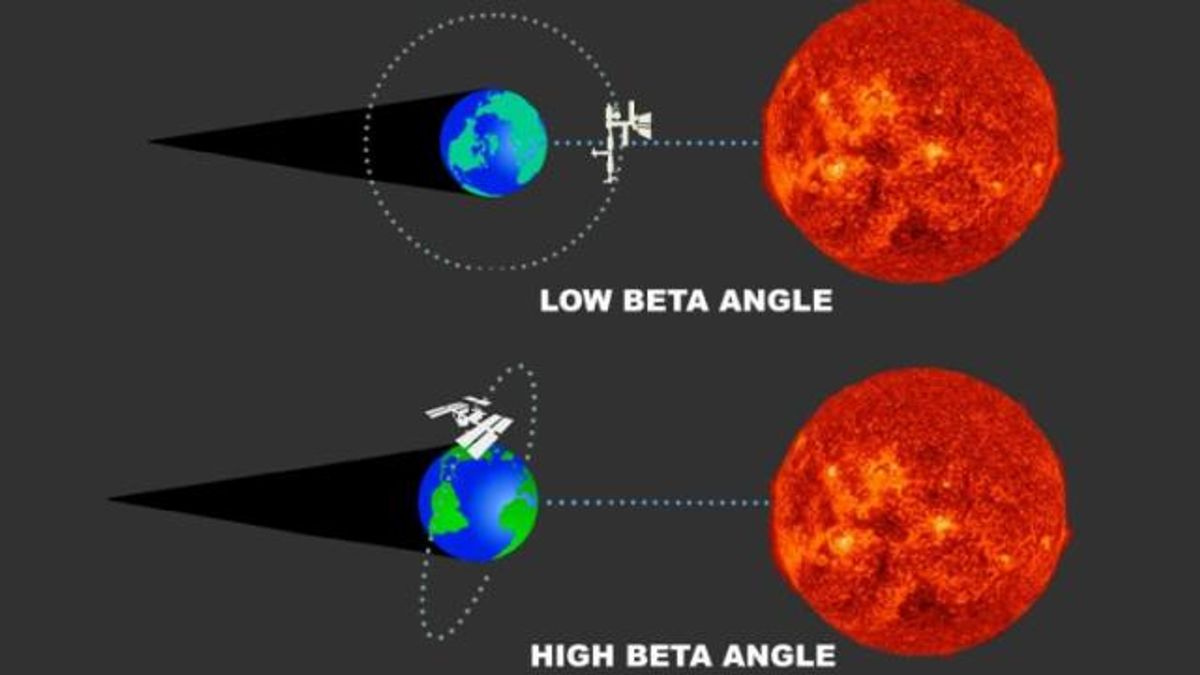
ISS crews usually are treated to a sunrise or sunset about every 45 minutes. However this crew hasn’t seen a sunset since June 1. The station has been in constant sunlight due to the beta angle.
Other WRAL Top Stories
Beta angle is the angle between an imaginary line drawn between the sun and the path the satellite takes around the Earth (orbital plane).
As beta angle increases, the time a satellite (like the ISS) is in sunlight increases. When beta angle exceeds 69º, it is in constant sunlight and mission control keeps an even closer around-the-clock watch on power production and temperatures. This happens 2-4 times a year but is most extreme near the summer solstice coming on June 21.
The station’s beta angle peaked at 74º Wednesday.
You might think that all this sunlight isn’t a big deal since the ISS is powered by massive solar arrays. More sunlight = more power, right? But constant sunlight presents challenges to the team of ground controllers in Houston. Solar panels need to be kept facing the sun to keep the power flowing. All that sunlight can also create thermal problems.
The space shuttle ensured even heating during high beta angle periods by going into what became known as “barbecue mode.” The orbiter would do slow barrel rolls as it orbited to ensure one side did not overheat. The Apollo spacecraft also rotated to even solar heating on the way to the moon.
The ISS had “barbecue mode” of its own early in the program. Thrusters on the Russian module rotated the station to permit more even heating as it traveled around the Earth during high beta angle periods. Today the Active Thermal Control System transfers heat through ammonia filled pipes to large radiators extending under the station to be dumped into space. Temperatures remain well under control this week, but controllers look forward to next week when shade will help even temperatures out.
The ISS will next brightly rise in our skies from the northwest on Saturday, June 21, at 10:44 p.m. Five minutes later it will begin to dim as it passes into Earth¹s shadow in the SE, once again allowing the crew to see a sunset.
Tony Rice is a volunteer in the NASA/JPL Solar System Ambassador program and software engineer at Cisco Systems. You can follow him on twitter @rtphokie.