A new Senate proposal would give counties more leeway to raise sales taxes - but would ban them from using that revenue to meet education and transportation needs at the same time.
House Bill 1224 is scheduled for a floor vote in the Senate on Thursday.
Other WRAL Top Stories
The legislation, unveiled as a Senate substitute in the Senate Finance Committee on Wednesday, would allow counties to raise sales taxes by a half-cent, rather than a quarter-cent, to pay for education funding. It would cap the local rate at a maximum of 2.5 percent, which, when added to the current state sales tax of 4.75 percent, would mean a maximum sales tax of 7.25 percent in any county.
Counties would still need to obtain voter approval for any increase.
However, the proposal requires counties seeking an increase to raise their local rate all the way to 2.5 percent, disallowing counties currently at 2 percent from seeking a smaller quarter-cent increase.
It would also require counties to use all new revenue generated by a hike for either education needs or transportation needs, but not both.
Counties would not be allowed to have a quarter-cent sales tax for transportation and another quarter-cent for schools. If they have or institute a sales surtax for schools, they would have to repeal it or allow it to expire before going to voters for a new increase for transportation needs.
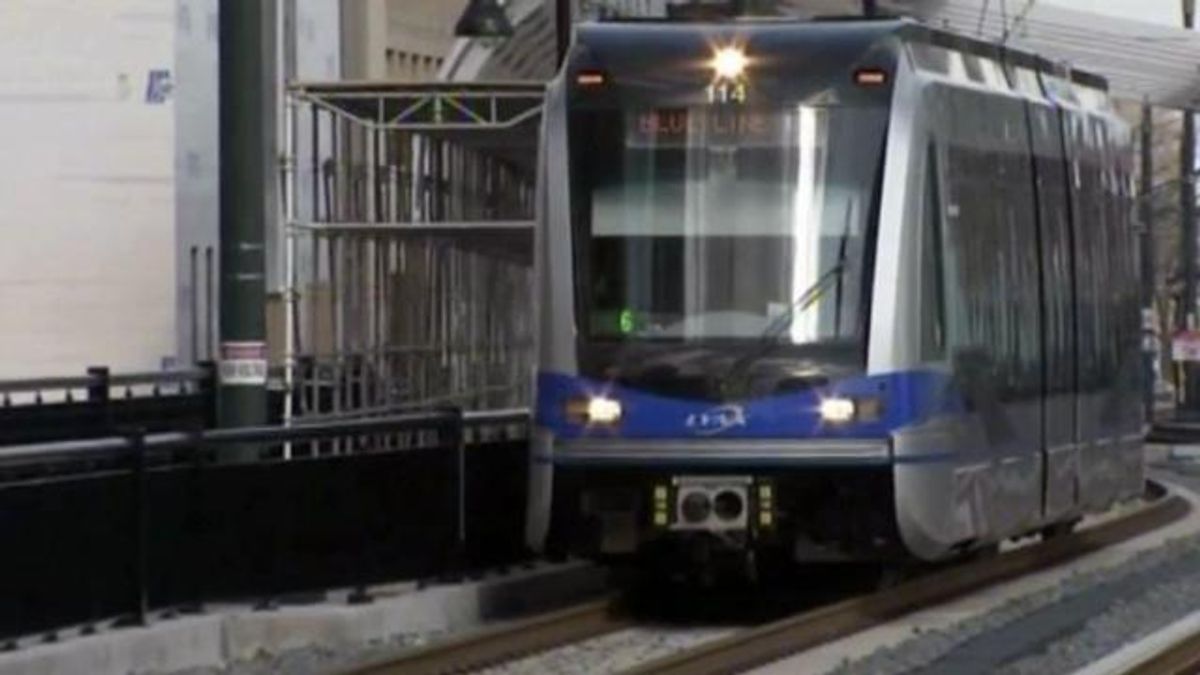
That change would most immediately affect Mecklenburg County, where commissioners are backing a quarter-cent sales tax increase on the ballot this fall. The money would mostly go to supplement teacher salaries. But the county would have to scuttle that plan, since it has already enacted a half-cent transit tax, bringing it to the cap of 2.5 percent.
It could also affect Wake County, where Democratic commissioners have proposed a quarter-cent sales tax increase to pay for teacher raises. The county Board of Commissioners is expected to vote Aug. 4 on whether to put the referendum on the ballot in November.
The proposal would force the increase up to a half-cent instead, and block Wake from proposing another tax increase for transportation needs. That, in turn, would relieve political pressure on the Republican majority on Wake's board, which has resisted growing calls to put a half-cent transit sales tax before voters.
Durham and Orange counties currently have a 2.75 percent local sales tax, which exceeds the proposed cap, because they have also already enacted a half-cent transit tax. Under the proposal, they would be allowed to keep that rate unless one of their surtaxes is allowed to lapse, at which point they would not be allowed to reinstate it.
Sen. Josh Stein, D-Wake, said he was puzzled by the proposal.
"Why wouldn’t we allow it if they chose to designate a quarter-cent to transportation and a quarter-cent to education? Why must it be one or the other?" Stein asked. "What if they have needs for both?"
Sen. Rick Gunn, R-Alamance, had no ready answer.
"We really want to try to make a commitment emphasizing education," Gunn said. "Allowing a choice to be made is the appropriate avenue to take."
"I’m confused," Stein responded. "Why we would not allow the counties to have what they want?"
"If you’re going to raise sales taxes for schools," Gunn said, "we’d like you to go ahead and make that decision."
Advocates for county and local governments were also confused by the measure.
Johanna Reese with the North Carolina Association of County Commissioners said her group is "concerned about loss of flexibility in the use of the funds."
"This is a rather large change to be making so quickly. Perhaps the committee could consider sending this to the Revenue Laws Study Committee," Reese told the panel.
Erin Wynia with the North Carolina League of Municipalities seconded the call to send the proposal to a study committee before implementing it.
"We appreciate the attention to the needs of local governments," Wynia said, but added the League of Municipalities is concerned about "the effect it could have on regions to raise funds for transportation – those are usually levied at the county level."
Local transit advocates say it could devastate plans for multi-county systems, such as the one currently in the planning stages in the Triangle.
"This is a really bad bill that could kill the transit referendum for Wake County," said Karen Rindge with WakeUP Wake County.
Another source, speaking on background, said, "It pits transit against education, and transit's going to lose every time."