General Assembly Tentatively Agrees on a $20.7 Billion Budget
The General Assembly tentatively agreed Saturday on a $20.7 billion budget plan, one that allows counties to raise some taxes but also phases out the requirement they pay for some of their residents' Medicaid expenses.
Posted — Updated

The budget, part of a two-year spending plan for state government, was finalized by Democratic legislative leaders nearly two months after negotiations began and four weeks after the start of the fiscal year.
"This is a difficult process," Sen. Walter Dalton, D-Rutherford, said before the Senate tentatively approved the spending plan Saturday morning on a 25-13 vote. "But it was worth it because we have a budget that we can be proud of."
The state House gave its initial approval to the budget later in the day on a 65-53 vote. The second of two required votes in each chamber is scheduled for Monday. The proposal will then go to Democratic Gov. Mike Easley for his approval.
During the unusual weekend session, the Senate Democrats who crafted the budget plan heralded its provisions to set aside $135 million for new college scholarships and tax credits for low-income families, to create a dedicated cancer research fund, and to spend $860 million in cash and debt on university building projects and land conservation.
In a statement, Easley praised the Legislature for its work on the budget.
"I commend this legislature for their vision and courage," said Easley.
But minority Republicans attacked the budget for making permanent a "temporary" statewide sales tax increase, six years after the boost was first approved during the depths of a recession to combat a budget shortfall. If the budget is eventually approved, most residents will continue to pay a 6.75 percent sales tax on most purchases.
Two tax breaks - allowing the highest income tax to fall from 8 percent to 7.75 percent and an earned income tax credit for low-income residents - will begin next year.
GOP leaders also said the budget spends too much - a 9.5 percent increase over last year - without dealing with core problems such as North Carolina's high dropout rate in high schools, or the billions of dollars in backlogged road projects.
"We have an education system that's failing our students," said Senate Republican Leader Phil Berger, R-Rockingham. "We have a transportation system that is crumbling. ... No, this is not a good budget. This is not good for North Carolina."
The final budget is a huge victory for county governments, which will have their share of Medicaid expenses - expected to reach $520 million this year - eliminated by July 2009. Rural and poor counties have complained for years that the skyrocketing costs of health care have forced them to continuously raise property taxes.
"It will make a tremendous difference," Democratic Rep. Doug Yongue of Scotland County, which has one of the highest property tax rates and percentages of Medicaid-eligible residents, said as the House debated the budget. "We've been giving lip service to Medicaid since I've been here. But that is reality now."
Counties also could either raise sales taxes by a quarter of a cent or the land transfer tax from 0.2 percent of the sales price to 0.6 percent - an additional $800 on a $200,000 home.
Although proceeds from such a tax increase are expected to be used school construction or other infrastructure needs, the final budget language contains no such requirement and wouldn't funnel any of that money to cities.
The transfer tax option delayed the budget's passage for weeks after Senate Democrats balked at the idea. The North Carolina Association of Realtors has spent nearly $600,000 this year on a public campaign opposing what it called the "NC Home Tax," arguing it would make housing less affordable.
Sen. John Snow, D-Cherokee, was the only Senate Democrat who voted against the budget, explaining in a statement he had pledged to his constituents to vote against the transfer tax. Sen. Fletcher Hartsell, R-Cabarrus, was the lone GOP member to support it.
Easley received most of what he wanted in the measure, including $56 million annually for the next two years to expand his More at Four prekindergarten program and $87 million for a program that would help low-income students complete college debt-free.
"This is a gutsy and aggressive budget that finally fulfills our historic promise to all people that they can achieve their dream of going from pre-kindergarten through college debt free," said Easley, in a statement.
"It is a truly transformational document that allows North Carolina to emerge as the nation's clear leader in facing the educational challenge of the 21st century," continued the statement.
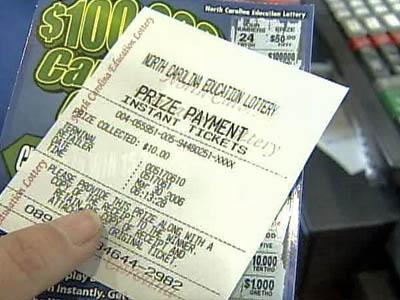
Another $37.5 million to help reduce class-sizes in early grades fills a gap created because the new North Carolina Education Lottery has failed to meet expected profits.
The budget bill tweaks the 2005 lottery law to allow higher prize payouts as way to boost tepid ticket sales.
The Senate's signature piece is the cancer research fund, which Dalton said would place the University of North Carolina's cancer center among the top five such centers in the country.
Ultimately expected to receive $50 million annually, the fund is paid in part by raising the tax on cigars and smokeless tobacco from 3 percent of wholesale price to 10 percent.
Copyright 2024 by WRAL.com and the Associated Press. All rights reserved. This material may not be published, broadcast, rewritten or redistributed.