Log in to WRAL.com with one click using your favorite social network:
OR
Log in using your WRAL.com account:


Wrong email/password combination.

Forgot password?

Register with WRAL.com using your favorite social network:
OR
Register for a WRAL.com account using our web form.

Login Options

2:20 p.m. • 2-12-12

Weather Forecast for Raleigh

  • Mon: Partly Cloudy.
    • Hi: 50° F
  • Tue: Rain.
    • Hi: 53° F
  • Wed: Partly Cloudy.
    • Hi: 57° F

Other Locations

> 7 Day Forecast

Doppler Image

Marketplace Links

Social Links

Main Menu

How U.S. History is taught could change in N.C.


e-mail print friendly
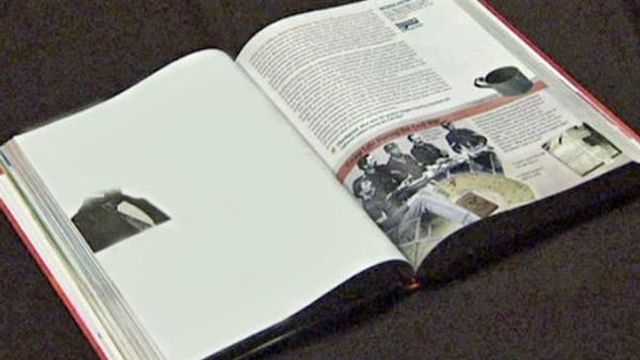
history book
history book

A new proposal for the history curriculum in North Carolina public schools is causing uproar. Among the biggest concerns is covering U.S. history only from 1877 to the present in the 11th grade.

“There's nothing on the Confederacy, nothing on Robert E. Lee, nothing on Abraham Lincoln, nothing on any battle, nothing on Reconstruction, nothing on the causes of the war, nothing on slavery – nothing on slavery anywhere in the curriculum,” said Holly Brewer, associate professor of early American history at North Carolina State University.

Brewer opposes the curriculum change and says students would not learn enough about important historical concepts like slavery.

The state Department of Public Instruction argues that students would learn about slavery and other pre-Reconstruction issues in the required civics and economics class.

Brewer disagrees and says it's not enough time to cover all that needs to be taught.

“How could you possibly do justice to that (slavery) if you just mention it in passing as you're talking about a civil rights struggle,” she said.

World history is currently taught in the ninth grade, civics and economics in the 10th grade and U.S. history, which now begins with the founding fathers in 1789, in the 11th grade.

Under the proposal's first draft, U.S. history would begin in 1877 so more time could be given to recent historical events, such as the Vietnam War and the conflicts in Iraq and Afghanistan.

“Those are the parts of history that our children don't get to," said Rebecca Garland, the chief academic officer for DPI. "That's the part they see on television every night, and that's the part they don't understand."

The proposal would also include revising the social studies standards in elementary and middle schools to provide more time to study U.S. history.

"One of the over-arching goals of the new curriculum standards was to give our students the opportunity to study U.S. history in depth and up to present day," Superintendent of Public Instruction June Atkinson wrote in a Feb. 8 letter to lawmakers. "The proposed standard would add U.S. history at the elementary and middle school levels so that students would have studied the full scope of U.S. history twice before ninth grade."

Gov. Beverly Perdue said she doesn't support the idea.

"I’m surprised that anybody would want to take out the core of history content, and just the bold leadership and decision making that helped found a democracy from a group of ragtag British folks,” Perdue said.

DPI is receiving feedback on the proposal, which is slated for several rounds of revision.

A second draft of the proposal should be ready for the state Board of Education to review next month. It could be a year before a new curriculum is finalized, and any changes would not go into effect until 2013 or later.
RELATED TOPICS: Public Schools, Beverly Perdue, Vietnam War, Civil Rights, Afghanistan, NC State University

e-mail print friendly

182 Comments


WRAL.com welcomes your comments on this story. All comments are moderated prior to publication based on our posting guidelines. Please review them prior to posting and if your message is not approved.

View Comments VIEW ALL 182 COMMENTS

This story is closed for comments. Comments on WRAL.com news stories are accepted and moderated between the hours of 8 a.m. and 8 p.m. Monday through Friday.

Latest Comments
Our history prior to 1877 is too critical to a proper appreciation of our values and many of the factors that has made out country great. The Constitution, the Bill of Rights, the Federalist Papers and the persons instrumental in their creation are the foundations upon which our nation was founded. Are events such as the War of 1812 and the Dread Scott case now just anecdotal foot notes? How about Lincoln's Emancipation Proclamation and the Gettysburg Address?

Perhaps is a case of lazy educators that don't want to perform their job functions and fully earn their salaries.

What differrence what they teach, judging from these comments nobody knows the real story anyway. Teachers will put their spin on it as well screwing it up even more. SO.....FORGET ABOUT IT!

A really stupid idea. History is something of a moving target anyway usually written by the winners. But recent history is really skewed because so much information is hidden to protect the living and at issue with those with an axe to grind. What happened here before 1877 is very important with how we got where we are.

Never the less...The Union offered Slavery to the South forever. Somehow this type of "History" is never mentioned. Just making a point on how important it is to keep ALL of our history in schools. Ill bet that not a handful of people even has heard of this. I work at a High School in Durham, and I found that only one "History" teacher had ever heard of this. We need to teach COMPLETE history to our children instead of picking and teaching just what "Sounds good" True history is..the United States Congress pass a Amendment to the Constitution that would allow slavery forever as long as it was so wanted by anystate. Like it or not.

8th NC "So if the South w2as fighting for slavery..the war would have never happened because the North handed slavery to them on a platter."

Incorrect, at that point it didn't matter. The South was more worried that with Lincoln's election, the pro slavery vote would be weakened in Congress and eventually abolished as Lincoln stated many times that he wouldn't allow slavery to expand to new states. This is what caused the immediate secession of Southern states. The North was merely attempting to keep the country together and out of a war. Again, the North wasn't fighting to end slavery-not sure why you and others keep trying to twist the argument that way. They were fighting to preserve the Union. But it still remains that the UNDERLYING cause of this was and remained slavery.

View Comments VIEW ALL 182 COMMENTS
Report It

Multimedia

Click Here