Log in to WRAL.com with one click using your favorite social network:
OR
Log in using your WRAL.com account:


Wrong email/password combination.

Forgot password?

Register with WRAL.com using your favorite social network:
OR
Register for a WRAL.com account using our web form.

Login Options

3:54 a.m. • 2-11-12

Weather Forecast for Raleigh

  • Today: Mostly Cloudy.
    • Hi: 52° F
  • Sun: Clear.
    • Hi: 43° F
  • Mon: Mostly Cloudy.
    • Hi: 50° F

Other Locations

> 7 Day Forecast

Doppler Image

Marketplace Links

Social Links

Main Menu

Salmonella could be to blame for birds' deaths


e-mail print friendly
bird
bird

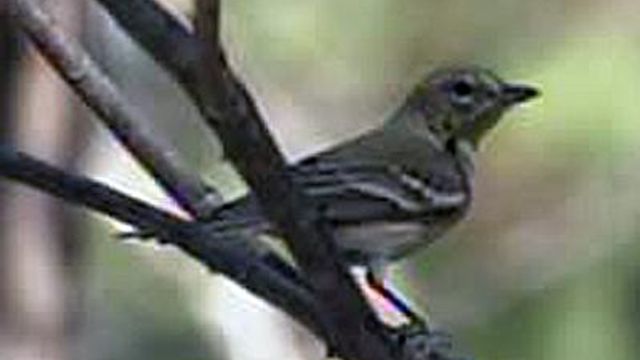
Avian salmonella could be to blame for the seemingly inexplicable deaths of a number of birds in Southern Pines.

Bill Kastern, a biologist and owner of Wild Birds Unlimited in Aberdeen, says his shop has received numerous calls from Southern Pines residents concerned about birds found dead in their yards.

The area, he says, has been “overwhelmed” with pine siskins this winter because of a poor food supply up north. He believes they could be carrying the strain of the disease.

“Usually, when birds start dropping dead in the winter, the only thing you can blame it on is avian salmonella,” he said. “Since it’s winter, it’s not a mosquito-borne illness.”

Kastern said the bacteria are spread when birds cough and sneeze, and wherever they congregate. Symptoms of avian salmonella include a thin and disheveled appearance and swollen eyes.

The disease is different from the bird flu and cannot be spread to humans. It can spread to other animals, including household pets.

Kastern recommends washing bird feeders and baths with a 10 percent bleach and burying any dead birds. He warns that people and pets should not touch dead birds to prevent spreading the infection.

He expects the problem to go away soon since pine siskens are heading back north for spring.

Kastern stressed that the strain of salmonella is not related to the salmonella scare involving the nationwide recall of hundreds of peanut butter products.
e-mail print friendly

4 Comments


WRAL.com welcomes your comments on this story. All comments are moderated prior to publication based on our posting guidelines. Please review them prior to posting and if your message is not approved.

View Comments 4 COMMENTS

This story is closed for comments. Comments on WRAL.com news stories are accepted and moderated between the hours of 8 a.m. and 8 p.m. Monday through Friday.

Latest Comments
This story is important because my family does keep bird feeders (year round). I would like to ask the community and this reporter if this Pine siskin disease is related to the eye disease we have seen in several House Finches. The House Finch eye disease can be researched at the Cornell University birding education site http://www.birds.cornell.edu/. They are also conducting a bird disease survey at http://www.birds.cornell.edu/hofi/.

My question would be, if salmonella has been found to taint peanut butter made for human consumption, would it not be possible for salmonella to be tainting the suet cakes made for wild bird consumption? I had never seen a Pine Siskin until I put out a suet cake. I'd hate to think that instead of helping the wild bird population I was actually hurting it.

Hello-o! Where does this article say anything about government money being used? And it is important to know what to do since this infection can affect pets as well. Don't forget that wild birds are also responsible for pest control in the insect world.

I'm sure more money was spent to determine why these birds were sick, than spent to determine why 29 kids were home sick from school today. Priorities! But I guess we HAVE to give the animal freaks their share of the government money. Its a shame, though, that our money has to be wasted like that.

View Comments 4 COMMENTS
Report It

Multimedia

Click Here