Local News
Advocates concerned for N.C.'s youngest mental patients
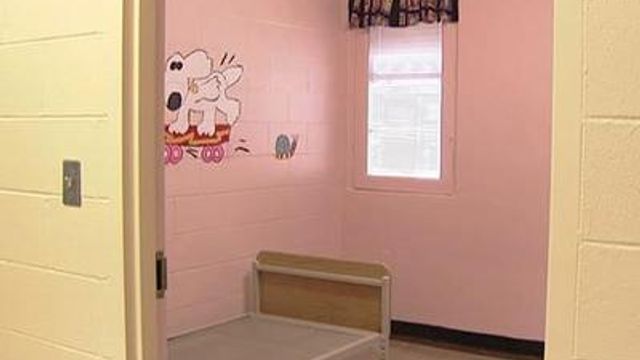
Patient advocates are expressing concerns about mold, mildew, asbestos and a prison-like setting at the state’s old John Umstead Hospital in Butner, where children and adolescents are treated.
Posted — UpdatedRALEIGH, N.C. — Patient advocates are expressing concerns about mold, mildew, asbestos and a prison-like setting at the state’s old John Umstead Hospital in Butner, where children and adolescents are treated.
Meanwhile, less than a mile away, at the new $130 million Central Regional Hospital, 30 beds intended for those patients remain empty.
The new state-of-the-art mental facility, which opened last summer to adult patients from Umstead, was built with a children's unit that also includes an indoor gym, exercise room and classrooms that are now used for additional office space.
Clinical director Dr. Stephen Oxley says there were not enough beds planned for the child and adolescent population.
The approximately 75 juvenile patients are split between Central Regional's Umstead campus and its Dorothea Dix Hospital campus in Raleigh. The hospital's plan is to eventually have all of them at the Umstead facility, which once served as an army hospital for U.S. military personnel returning from World War II.
"It's old, but I think it's been fairly well maintained," said David Bullard, an administrator at Umstead.
The state has recently spent approximately $200,000 renovating the facility with fresh paint, brighter lights, new security cameras and an upgraded air-conditioning system.
Two years ago, state health officials identified mold and mildew in a part of the children's gymnasium that wasn't being used. Last month, the area was sealed off from any kind of use.
That building is connected to the buildings that house the children's living and treatment area.
Vicki Smith, executive director of Disability Rights North Carolina, a federally mandated advocacy group, is concerned the mold could spread and says it is a serious environmental concern.
Oxley says the campus’s decentralized infrastructure helps avoid that problem.
"Each building in that old facility has its own ventilation system," Oxley said. "And really, that's the way mold would tend to travel. So as long as we can isolate those, we wouldn't expect it to spread to other parts of the hospital."
Health issues aside, Smith says there are other concerns about the Umstead campus.
"The location where the kids are today was never built with children in mind," Smith said. "It was built to be an army barracks."
Disability Rights North Carolina believes there is space available to treat anywhere from 60 to 70 children at Central Regional.
In a letter to Department of Health and Human Services Secretary Lanier Cansler, Smith says one solution would be to move a research team to Dix to make room for additional patients. Cansler says no decision has been made to change the plan but that officials are considering all possible alternatives.
Central Regional Hospital officials admit that would be ideal.
"We would have loved to be able to do that, but there just weren't enough built in this building," Oxley said.
Umstead, the state says, at this point is the best compromise.
"Therein lies a larger problem, in that when they built this hospital," Smith said. "Apparently, this is another example of poor planning."
• Credits
Copyright 2024 by Capitol Broadcasting Company. All rights reserved. This material may not be published, broadcast, rewritten or redistributed.