Log in to WRAL.com with one click using your favorite social network:
OR
Log in using your WRAL.com account:


Wrong email/password combination.

Forgot password?

Register with WRAL.com using your favorite social network:
OR
Register for a WRAL.com account using our web form.

Login Options

5:30 a.m. • 2-11-12

Weather Forecast for Raleigh

  • Today: Mostly Cloudy.
    • Hi: 50° F
  • Sun: Clear.
    • Hi: 41° F
  • Mon: Mostly Cloudy.
    • Hi: 50° F

Other Locations

> 7 Day Forecast

Doppler Image

Marketplace Links

Social Links

Main Menu

Higher Impact Fees Proposed to Control Raleigh's Growth


e-mail print friendly
Higher Impact Fees Proposed to Control Raleigh's Growth

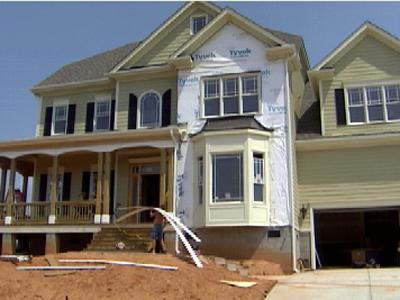
A city councilman has proposed tripling Raleigh's impact fees to get a better handle on local growth in the coming years.

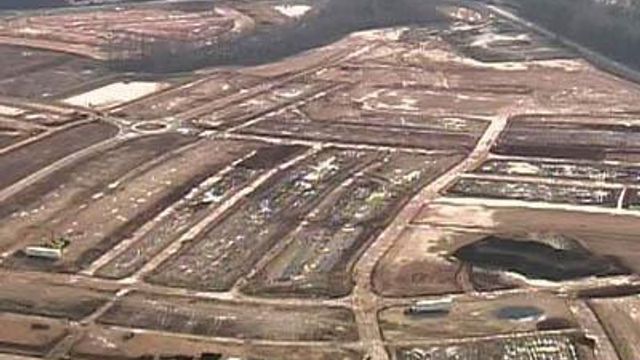
Raleigh encompasses about 90,000 acres – the city was founded on 400 acres about two centuries ago – and has jurisdiction over another 40,000 undeveloped acres.

But officials said as much as 50 acres is developed every day in Wake County, which makes control over the development of the remaining land critical to Raleigh's future.

"We are running out of valuable space here. We're going to have to build a lot smarter," City Councilman Thomas Crowder said, calling for developers to pay three times the impact fees now charged.

"I would like to see us triple that and then provide incentives. If you lessen the impact and provide water conservation, we can then provide incentives to move that down," Crowder said.

Raleigh's population of about 368,000 also is expected to grow as available land shrinks. Estimates show the city's population increasing about 13,000 people a year.

"As one of the metro areas, we're definitely in the Top 10 as far as growth across the country," said Mitchell Silver, Raleigh's planning director.

Undeveloped sites in parts of southeast Raleigh and to the northeast near Louisburg Road are poised for the most development, Silver said. But he said it would take about 40 years to completely develop the remaining 40,000 acres, giving the city time to control growth.

Mayor Charles Meeker said every acre is critical to the city's future, especially those used for roads.

"The major challenge for us is transportation, with the state not building a lot of new roads and the city having to pass bond issues to keep up," Meeker said.
RELATED TOPICS: Charles Meeker, Southeast Raleigh, Thomas Crowder, Wake County

e-mail print friendly

31 Comments


WRAL.com welcomes your comments on this story. All comments are moderated prior to publication based on our posting guidelines. Please review them prior to posting and if your message is not approved.

View Comments VIEW ALL 31 COMMENTS

This story is closed for comments. Comments on WRAL.com news stories are accepted and moderated between the hours of 8 a.m. and 8 p.m. Monday through Friday.

Latest Comments
Sprawl is bad because the development pattern it creates can not support the retail, utility, or services infrastructure needed, no matter how "smart" the road grid is laid out.

In sprawl, more gas is consumed to transport a store's goods, employees, and customers. This increases as the space between residential units increases. The necessary parking lots eliminate putting the land under them to better use. Prices go up as the cost of salaries goes up and the lower prices from buying in bulk goes down.

The loss of jobs is offset temporarily by construction jobs. But to keep that going, there needs to be more things being built further from other places. The Triangle has been riding on this "growth" for about a decade now, but it can't last forever.

Raleigh and the Triangle has set itself up well for a post-industrial economy *if* we can keep high paying jobs in place. Creating an affordable, attractive place to live will be more important than a big yard.

Take an example of ten houses on .2 acres vs. one house on two acres. The ten houses take ten times as much raw materials to *assemble* but take almost the *same* amout of infrastuctue to support. So the cost of building and maintaining the roads, paying for electricty and water, etc., is split ten ways instead of one. Ten "two-acre" houses would consume more resourses than the ten .2 acre houses.

If police and fire service depended solely on population, then there would be no difference. But that isn't the case. To use a TV example, Mayberry could get by with just Barney and Andy because the town was but a few square miles. If Aunt Bea, Thelma Lou, Otis, etc. all lived on one acre lots, Sherrif Taylor's response time (and that of the fire department) would fall dramatically. To say nothing of schools. Buses have to go further to pick up kids, or more schools are built, costing more and and building materials.

Expanding development outward forces time and money to be spent on infrastructure that isn't necessary. Neighborhoods closer to the center of town are abandoned at the first sign of property value loss. Instead of investing in keeping older communities healthy, we take off to the outer reaches of town where the land is cheap. There is land available well inside Raleigh that is undeveloped with access to roads, electricity, water, etc... that is untouched or abandoned. Meanwhile we spend the money to clear land, create new roads, create new electrical lines, and so on, and then absorb the cost of maintaining them. That is why it is wasteful. Any finite resource, such as surface area, should not be wasted, no matter how abundant.

Roads, roofs, shopping centers, and suburban office parks, as well as supporting parking lots, not to mention the reduced tree canopy, all still contribute to creating a heat island. But if you google Raleigh, the map still looks green, so who cares?

They need to take it a step further and ban multi-unit dwellings.

To flashlight:

"Sprawl is a bad thing, it consumes land, gasoline, electricity, water, and other infrastructure resources unnecessarily."

That doesn't even make any sense. A given house will use the exact same amount of water, natural gas, and electricity whether is it on a tenth acre or a square mile. Land? I suggest there is plenty of land. Grab a map and check it out. Land-land-land-land-town-land-land-land, etc. Way more land undeveloped than developed by any measure in NC. Gasoline may or may not go up depending on the amount each individual auto needs to travel to get to a given destination. Obviously, there is only one Crabtree Mall and it is 10 miles from Wake Forest to Crabtree. But now we have Triangle Town Center. Same stores. Much closer to Wake Forest. Also, gas use depends on the placement of local strip centers. Well and frequently interspersed cuts down a lot on transit needs.

I would even suggest that sprawl keeps a city cooler. It eliminates the heat island effect.

View Comments VIEW ALL 31 COMMENTS
Report It

Multimedia

Click Here