Local News
Medical Board Wants Death Penalty Lawsuit Dropped
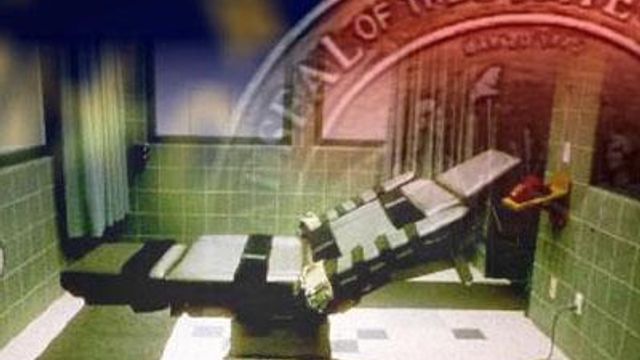
The death penalty debate was back in court Wednesday, with the North Carolina Medical Board asking a judge to dismiss a lawsuit filed by the North Carolina Department of Correction.
Posted — UpdatedRALEIGH, N.C. — The death penalty debate was back in court Wednesday, with the North Carolina Medical Board asking a judge to dismiss a lawsuit filed earlier this year by the North Carolina Department of Correction.
The March lawsuit contends that the Department of Correction cannot find doctors to monitor inmates at executions because of the medical board's recent policy change that a "physician who engages in any verbal or physical activity ... that facilitates the execution may be subject to disciplinary action."
State law requires that a licensed physician be present at all executions to ensure that the condemned inmate does not suffer.
Thomas Pittman, an attorney representing the department, said that the prison system's doctors are not willing to be present because of the medical board policy, which, he argued, violates the state's general statutes and makes it impossible for the prison system to carry out the law.
"They've clearly indicated their intention to discipline doctors," Pittman said. "The board looks unfavorably at a physician who is involved in an execution doing anything more than just being a potted plant."
But the medical board's attorney, Todd Brosius, said the lawsuit was premature.
"The board talks about the potential for discipline. It doesn't say the doctor will be disciplined," he said. "The board isn't attempting to discipline anyone for what's required under the (state) statute."
Superior Court Judge Donald Stephens halted several planned executions in January, ruling that the board's policy conflicted with state law.
He ordered the Council of State, which comprises the governor, lieutenant governor and seven other statewide elected officials, to change the protocol used in executions so it wouldn’t conflict with the policy.
In February, the council adopted revised execution procedures that call for a doctor to monitor the inmate's body functions and notify the warden if it appears the prisoner is suffering.
The question is whether that would violate the board's code of ethics.
"Whether it's a medical procedure or not, the board is allowed to discipline doctors for the violation of the ethics of the profession," Brosius said.
About 42 full-time doctors and psychiatrists work for the Department of Correction, four at Central Prison where executions are carried out, and none of them want to be a part of an execution under the protocol, Pittman said.
The state is asking in the lawsuit that a judge rule an execution is not a medical procedure, which would mean the medical board would not have oversight over physicians taking part.
It is also is seeking a permanent injunction prohibiting the board from disciplining any physician who participates in an execution.
"The DOC can't move forward," Pittman said. "It can't perform its statutory duties."
Pittman called the issue a "de facto moratorium" based on threats and said "the doctors are, understandably, terrified."
"I do not believe they are there to render medical care," Pittman said.
The Department of Correction said an execution is a non-medical procedure and that a doctor only intervenes if something goes wrong. At that point, it becomes a medical procedure, and the execution is stopped and rescheduled for a later date.
Brosius told Stephens that if a doctor steps in when the procedure goes wrong, it is not against the medical board's policy.
"I don't think that would be considered facilitating an execution. That would be considered halting an execution," he said. "I'm not sure the medical board is going to discipline someone for saving someone's life."
But physician participation in the execution process is unethical, Brosius said.
"It's against the ethics of the profession, and there's a good reason for those ethics," he said
Earlier this month, Senior Administrative Law Judge Fred Morrison Jr. said in a ruling in a separate lawsuit that the medical board overstepped its authority in threatening to discipline physicians.
He also ruled that the Council of State must reconsider the new protocol because it failed to hear arguments from those representing death row inmates before approving it.
Stephens could rule on the matter next week. He has several options, attorneys said. He could dismiss the lawsuit, could allow it to move forward and set a hearing date, or he could decide the legal questions and rule on the overall issue.

• Credits
Copyright 2024 by Capitol Broadcasting Company. All rights reserved. This material may not be published, broadcast, rewritten or redistributed.