Legislators pass DNA database expansion bill
The North Carolina General Assembly on Saturday approved a bill letting investigators collect DNA samples from suspects when they are charged with certain crimes.
Posted — UpdatedThe bill authorizes law enforcement to hold people who refuse to give a sample. If charges are dropped or the suspect is acquitted, the individual's DNA sample must be removed from the database.
Attorney General Roy Cooper said having the samples in the state DNA database will help solve crimes by locating repeat offenders.
"It's a win for North Carolina citizens," Cooper told WRAL News.
However, some lawmakers say requiring the sample upon arrest amounts to unreasonable search and seizure.
Rep. Rosa Gill, D-Wake, voted against the bill. She agrees that DNA is a useful tool in helping law enforcement solve crimes, but argues that obtaining samples from suspects who have not been convicted goes too far.
“I feel like it's unfair. I think it may be a type of targeting that we don't intend for it to be,” Gill said.
So far, the state's DNA database has helped solve more than 1,400 cases. Bill supporters argue that a wider database could solve as many as 100 new cases within the first year.
Kevin Blaine said he hopes one of those cases is his daughter's slaying outside a Raleigh convenience store. Jenna Nielsen, 22, was found dead in June 2007, behind the AmeriKing Food Mart on Lake Wheeler Road.
Police have interviewed hundreds of people and received thousands of tips about the pregnant Fuquay-Varina mother's slaying, but detectives still haven't made an arrest in the case.
"We are one phone call away, one arrest away from solving my daughter's case," Blaine said. "If we can utilize a tool, such as the DNA (database), to put this person behind bars, then we should look at all avenues."
Gov. Bev Perdue pushed for the legislation and said she sees DNA collection as an important tool for law enforcement officers.
“These samples will build a database that law enforcement can use to identify suspects and solve crimes. I know firsthand how effective this technology is. A friend of mine, Kathy Taft, was murdered earlier this year, and the suspect was caught through DNA analysis,” Perdue said in a statement.
Taft, a state Board of Education member, was beaten and sexually assaulted in a Raleigh home in March while recovering from surgery. The 62-year-old died three days later from her injuries.
Investigators became suspicious of Raleigh resident Jason Williford after he refused to provide a DNA sample. Sources say investigators eventually linked him to the Taft case through a discarded cigarette butt. He was charged with first-degree murder, rape and burglary in connection with Taft's slaying.
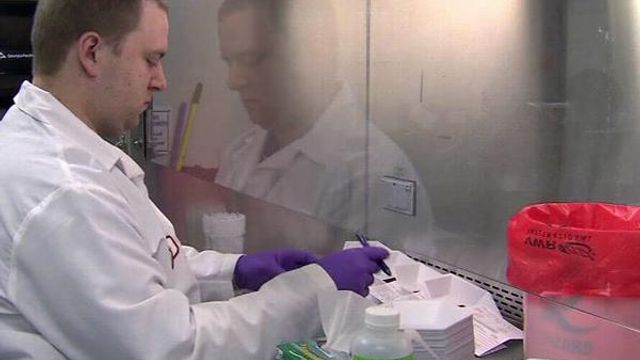
The DNA database expansion legislation will take effect Feb. 1. Federal funds will be used to pay for a portion of the DNA testing. Eight additional forensic criminal analysts are expected to be hired to analyze and review samples, distribute swab collection kits to law enforcement and help with training.
• Credits
Copyright 2024 by Capitol Broadcasting Company. All rights reserved. This material may not be published, broadcast, rewritten or redistributed.