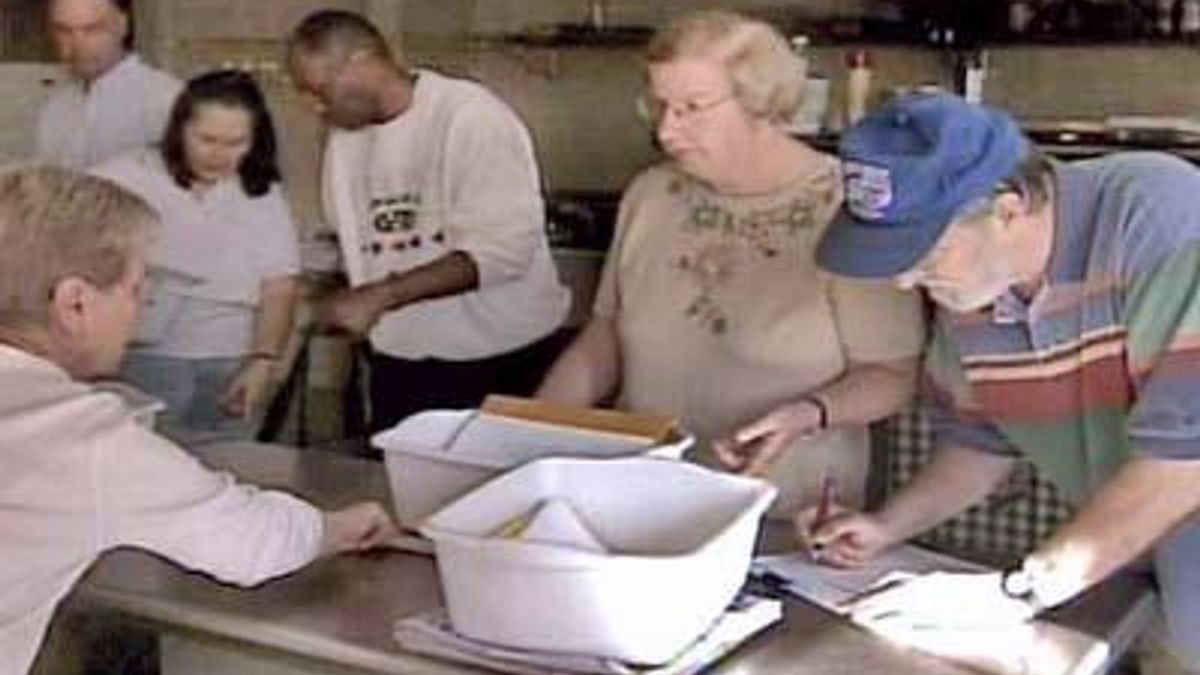
Raleigh, N.C. — New rankings of the states and major cities with the most adults volunteering place both North Carolina and the Triangle metro area in the bottom third of their respective categories.
North Carolina's volunteer rate of 27.3 percent ranked 32nd among the 50 states and Washington, D.C., while the Triangle's rate of 26.7 percent garnered the 35th spot among the country's 50 largest metropolitan areas.
The Corporation for National and Community Service, an independent federal agency, released a study of volunteerism from 2002 to 2007. The rankings count the volunteer rate from 2007.
The average 225.7 million hours put in annually by North Carolina's 1.8 million volunteers, though, add up: to an estimated economic contribution $4.4 billion.
The Triangle's 223,000 volunteers contribute an average of $516 million to the economy by donating 25.4 million hours, on average, each year.
Religious groups received the greatest share of hours from North Carolina volunteers, claiming 42.8 percent. Education was also a prime concern of volunteers, who donated 22 percent of their hours to such activities.
Social services claimed 12.6 percent of volunteer hours; health causes, 8.5 percent; civic activities, 4.5; sports and the arts, 2.8 percent; and other activities, 6.7 percent.
The main activities of North Carolina volunteers were fundraising, collecting and distributing food, general labor and tutoring or teaching.
Triangle volunteers divided their hours similarly to volunteers statewide; however, they added youth mentoring as significant activity.
Asheville led the state and placed 12th among the country's 75 largest mid-sized cities, with an average annual volunteer rate of 37.6 percent.
Durham was only slightly behind Asheville, with 37.1 percent of its residents volunteering an average for 45.9 hours annually between 2004 and 2007. Durham was counted as part of the Triangle metro area for national rankings.
Charlotte cracked the top 10 large cities, with a volunteer rate of 32.6 percent. Its 403,000 volunteers donate an average 50.3 million hours each year, for an economic impact of $982 million.


![[SLIDESHOW]](http://wwwcache.wral.com/asset/entertainment/out_and_about/2012/02/04/10712136/pics_agunn53833-100x75.jpg)
![[SLIDESHOW]](http://wwwcache.wral.com/asset/lifestyles/travel/2012/02/09/10710709/10710709-1328829176-100x75.jpg)
![[SLIDESHOW]](http://wwwcache.wralsportsfan.com/asset/basketball/2012/02/09/10705803/10705803-1328766083-100x75.jpg)
![[SLIDESHOW]](http://wwwcache.wral.com/asset/lifestyles/travel/2012/02/08/10704761/10704761-1328743348-100x75.jpg)


WRAL.com welcomes your comments on this story. All comments are moderated prior to publication based on our posting guidelines. Please review them prior to posting and if your message is not approved.
This story is closed for comments.
Corporations such as AICPA, Credit Suisse, Blue Cross Blue Shield, Measurement Incorporated, GlaxoSmithKline and too many more to mention, expect their employees to give back to the community and they do in creative and meaningful ways year-round. The generosity of these companies as well as individuals from all walks of life, civic groups, sororities and fraternities, etc. in terms of time, talent and treasure is impressive (from my perspective) and one of the very best things about Durham.
Anyone interested in volunteerin
July 29, 2008 9:28 a.m.
July 28, 2008 8:34 p.m.
July 28, 2008 11:32 a.m.
July 28, 2008 11:02 a.m.
I spent 7 years as a member of a civic organization in Raleigh, running, organizing or assisting with numerous projects that were designed to work best with broader community involvment.
It was like pulling hen's teeth to get the N&O, Local TV or Local Radio media to even deign to notice us. The most media coverage we received was when the venue for one of our prime projects was sold to a property developer.
For a prime example, look at the top of this page. Why is there not a tab for "Community" there. Surely there are one or more talented High-School kids out there who WRAL could bring on board to vet community event submissions as their service credits toward graduation and future resumes.
The Raleigh media needs to remember that it is LOCAL and to serve its community.
If the media gave community service some coverage they also might get fewer complaints about always having 'Bad News' on.
July 28, 2008 10:55 a.m.