Military members at greater risk of developing ALS
It's unclear why, but members of the armed forces, no matter when or where they served, are twice as likely to develop ALS, or Lou Gehrig's Disease.
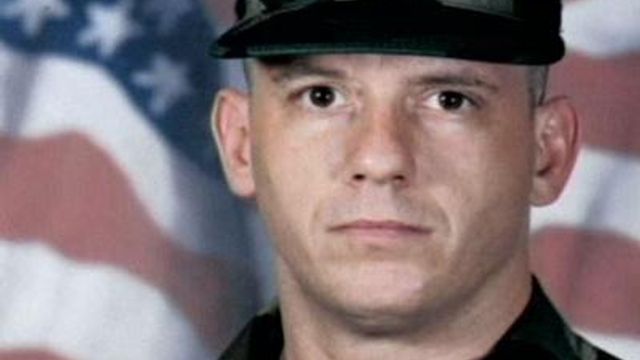
Posted — Updated"I was in the best shape of my life," said Smith, who was in his early 30s at the time.
That's before he was diagnosed in October 2007 with amyotrophic lateral sclerosis, or ALS – a disease that attacks nerve cells in the brain and spinal cord that control voluntary muscle movement. It eventually robs a patient of the ability to move his or her body, including the abilities to swallow and breathe, and leads to death within five years.
Smith's symptoms started showing up nearly two years before his diagnosis.
"Members of my unit started telling me that I was talking funny," Smith recalled. "A few months later, I was doing pull-ups and slipped."
Today, Smith gets around mainly in a motorized wheel chair. He receives benefits from the military, and the Department of Veterans Affairs is helping to defray the costs of a new accessible home.
According to the ALS Association, a nonprofit group that advocates for patients with the disease, evidence backed by a Harvard University study supports the conclusion that members of the armed forces – regardless of where and when they served – are twice as likely of developing and dying from the disease as those with no history of military service.
As of October 2007, the Department of Veterans Affairs, using a nationwide registry to track ALS in veterans, has identified more than 2,090 veterans with the disease.
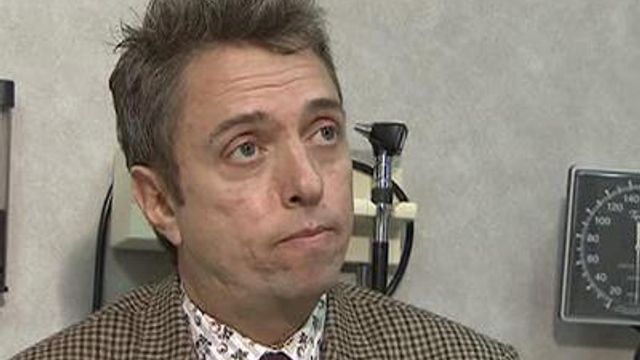
"When I saw (the research), I thought it was the most amazing and most terrible thing I had ever seen," said Dr. Rick Bedlack, a neurologist with the Department of Veterans Affairs and director of the Duke ALS Clinic at Duke University Medical Center.
Scientists do not know what causes ALS, but research is ongoing as to why people in the military are much more likely to develop it. The illness is now considered a service-connected disability, meaning those who suffer from it are able to get compensation from the U.S. government.
Recent studies show that people with ALS are twice as likely to have lean bodies and have participated in sports, which might be a clue as to why military veterans and athletes, such as the late New York Yankees first baseman Lou Gehrig, whose name is synonymous with ALS, develop the disease.
Right now, there are just theories.
"We think people have genetic susceptibility – a combination of genes that opens the door to the disease – and then, they get hit with something in the environment that triggers it," Bedlack said.
Researchers are developing a methodology of looking at gene interactions with the environment, and a national registry is tracking all ALS patients to learn more.
"Just because we don't know the cause doesn't mean that we can't find better and better ways to treat people, both in terms of slowing the disease – which we have been able to do – and in their quality of life," Bedlack said.
Technology has improved greatly over the years to help diagnose the disease – it can take up to a year to diagnose accurately, Bedlack said. By that time, it's possible for a patient to lose up to 50 percent of his or her motor neurons.
Veterans with ALS are among the first group of patients to test a government-funded innovation that allows them to communicate after they have lost their motor skills and ability to speak.
"We have learned of a way to tap into the brain's electrical activity, so that we can now put a cap on someone's head and tap into those signals and get people to interface directly from their brain to a computer without moving anything," Bedlack said. "So, someone who's basically locked in can now spell words on a computer screen for us, and we can understand what they're thinking."
The ALS Association's Catfish Hunter Chapter – named after the late North Carolina-born New York Yankees pitcher Jim "Catfish" Hunter – funds the Duke ALS Clinic and others like it in the state.
"When they signed up for the military, they didn't sign up for ALS," chapter President Jerry Dawson said. "So, they fought really hard for us, and now, it's our turn to fight for them."
With the new house and a baby due in January, Smith and his wife, Autumn, are not done fighting either.
"I'm real psyched. There's nothing I'd rather be than a father," he said. "Every day I wake up, I know it's going to be a good day. I have a lot to look forward to."
• Credits
Copyright 2024 by Capitol Broadcasting Company. All rights reserved. This material may not be published, broadcast, rewritten or redistributed.