Ankles can be replaced
Unlike old replacements set in cement, new prosthetics can do the intricate, heavy-lifting jobs of broken or damaged ankle bones.
Posted — UpdatedBut new devices and procedures have resulted in ankle prosthetics that can get patients back on their feet, with a bounce in their step, in weeks.
Larry Burnett, 63, suffers from osteo-arthritis, and his right hip has been replaced. But Burnett says his ankle has bothered him for more than 40 years.
"I turned it back when I was in basic training when I was in the service, and it just got progressively worse," said Burnett, adding that he favored that leg because the ankle kept folding over.
Burnett said he considered ankle replacement, but a prosthesis held in place with cement was unappealing.
"The failure rate was so high that the enthusiasm for the ankle (replacement) quickly waned," said Dr. James DeOrio, an orthopedic surgeon at Duke University Medical Center.
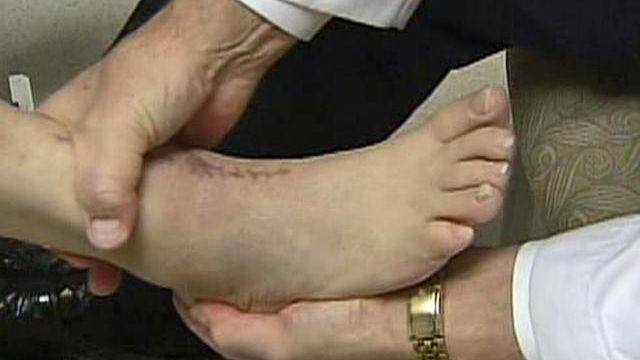
Six months ago, though, Burnett agreed to get a newer version of an ankle replacement: a prosthesis placed inside the shin bone in sections.
The prosthesis does not need cement. Its rough, titanium-spray surface allows bone to grow solidly around it.
"The technique to put them in takes about twice as long as a hip or knee replacement," DeOrio said.
Full healing might take two years, but most patients can get up on their feet and walk within in six weeks. DeOrio advises recipients do only low-impact exercise and avoid running or jogging, however.
Like other joint replacements, the ankle prosthesis can last as long as 15 years. The most likely part to fail is the plastic that mimics the cartilage, and doctors can replace those parts without taking out the entire prosthesis.
Burnett said that for him, his new ankle means freedom – including freedom from the pain that had plagued him.
"Before I really babied this ankle. Now, I don't have to," he said. "I can do whatever I want to with it."
• Credits
Copyright 2024 by Capitol Broadcasting Company. All rights reserved. This material may not be published, broadcast, rewritten or redistributed.