Stem cells, chemo can beat testicular cancer
Stem cell transplants done in conjunction with chemotherapy are offering hope to men with advanced testicular cancer.
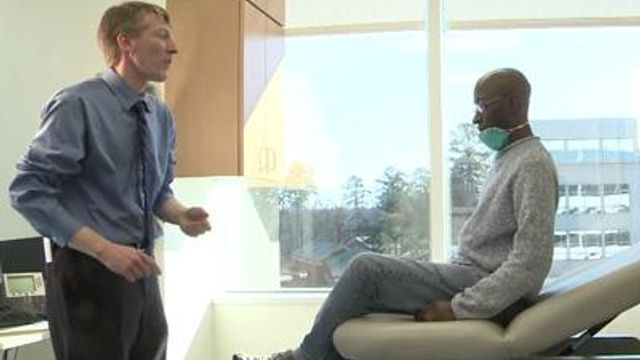
Posted — UpdatedAbout a year ago, David Alston, 42, went to his doctor for some odd symptoms, including "feeling numb in one leg for a couple of seconds," he said.
Alston had testicular cancer. Although it's rare, the disease is the most common malignancy for men aged 15 to 35.
Cycling legend Lance Armstrong survived it, as do most patients who are diagnosed and treated early.
In Alston's case, though, "by the time we had pretty much nailed down the diagnosis, it had spread. It had just gone all over the place," he said.
"He underwent conventional chemotherapy, tolerated that fairly well," said UNC Hospitals oncologist Dr. Paul Armistead.
Alston went into remission, but one tumor reactivated two months ago.
Armistead suggested tandem stem cell transplants. The treatment has been offered for several years, primarily at Memorial Sloan Kettering Cancer Center in New York, but is now available at UNC Hospitals.
Testicular cancer is very sensitive to chemotherapy. At a certain level, though, the drug becomes too toxic and suppresses the blood count, which can become life-threatening condition. Treatment is stopped at that point, sometimes before the cancer is truly beaten.
If the cancer recurs, a transplant using the patient's own bone marrow stem cells can help as he gets higher doses of chemotherapy.
"For each transplant, we're doing a cycle of chemotherapy," Armistead said. "We infuse stem cells; we let the (blood) counts recover. Once the counts have recovered, we repeat it."
"Giving me back my stem cells is going to build back my immune system," said Alston, who is still in the process of harvesting stem cells to be used when new rounds of chemotherapy begin.
Alston has done his own research on the treatment and hopes it will be the final knock-out punch for his cancer.
"I think this entire process and what I've learned about it has definitely given me some hope," he said.
• Credits
Copyright 2024 by Capitol Broadcasting Company. All rights reserved. This material may not be published, broadcast, rewritten or redistributed.