Health Team
Duke Researchers Use Precision Radiation To Target Tumors
Radiation can kill cancer tumors that are difficult to reach with surgery, but it can also damage healthy tissue. New technology at Duke University greatly reduces that risk and shrinks tumors faster.
Posted — Updated
DURHAM, N.C. — Radiation can kill cancer tumors that are difficult to reach with surgery, but it can also damage healthy tissue. New technology at Duke University greatly reduces that risk and shrinks tumors faster.
When Debora Tisdale learned she had breast cancer, her doctor said the tumor was close to her heart, which could make radiation treatments risky. Plus, she already has a family history of heart disease.
"We can irradicate the cancer, but a heart problem is forever and I'm young," the 44-year-old said.
"Whenever you deliver radiation to a tumor, there's almost always a risk to the surrounding normal structures," said Duke radiologist Dr. Lawrence Marks.
Duke researchers have new ways to target tumors and spare surrounding tissue. The techniques are called image-guided radiation therapy (IGRT) and image-modulated radiation therapy (IMRT).
"Instead of thinking about it as one beam, it becomes hundreds of little beams, and the intensity of each of those smaller beams can then be adjusted so that you can then deliver the appropriate dose to the target area," Marks said.
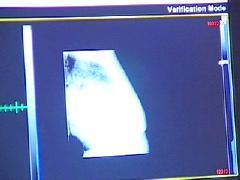
Cone Beam CT reveals a three-dimensional image of the tumor site. Since the radiation beam is more exact, doctors can deliver a stronger dose and shrink tumors faster. Plus, it significantly reduces side effects.
"(It's) never hit my heart. We did testing before hand. They did an EKG and a cardiogram before we even started, in the middle and afterwards ,and I'm monitored now every six months because I have heart testing -- and it's perfect," Tisdale said.
So now, Tisdale can concentrate on her hobbies and spend more quality time with her family. The new technology also allows doctors to apply radiation only while the patient takes a breath, which moves the tumor further from the heart and reduces the risk even more.
Copyright 2024 by Capitol Broadcasting Company. All rights reserved. This material may not be published, broadcast, rewritten or redistributed.