Autism revealed by the blink of an eye
How often children with autism blink is giving doctors new insight into how their minds work.
Posted — UpdatedTwo of Mike and Laura Ciavolino's 7-year-old triplets have autism.
Like most children with the disorder, both have trouble identifying emotions in others. They also are more likely to focus on objects than people.
"There's a difference in the way they focus compared to my son who doesn't have autism, and there's a difference in what they're focused on and what they're interested in," Laura Ciavolino said.
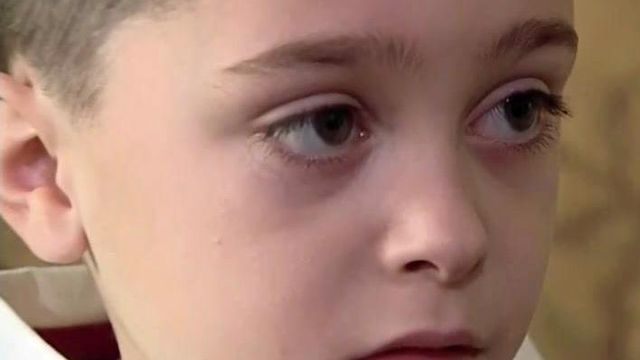
Researchers studied the rate at which children with autism blink to see exactly what their brains are focusing on.
"The less a child blinks, the more they are paying attention to what is happening," explained Dr. Warren Jones, with the Emory University Marcus Autism Center.
Researchers tracked the blink rate of children watching a video of other children playing.
During emotional scenes, the rate for children without autism slowed, while children with the condition blinked normally. That changed when children with autism spotted movement.
"They stopped blinking when they were looking at objects and when they were looking at objects in motion," Jones said.
Researchers said this new insight into how the mind of someone with autism works could help improve therapies.
"What this research gives us is a new tool for essentially understanding what might be capturing the attention of children with autism," Jones said.
Knowing what interests children with autism could eventually help doctors identify and treat those with the disorder earlier.
"Children who receive early intervention for symptoms in autism are reported to have the greatest gains in function," said Dr. Alycia Halladay, director of environmental science research for the nonprofit Autism Speaks.
Copyright 2024 by Capitol Broadcasting Company. All rights reserved. This material may not be published, broadcast, rewritten or redistributed.