Senate gives tentative OK to unemployment benefit cuts
The state Senate on Tuesday gave key approval to a sweeping rewrite of North Carolina's unemployment system, including deep cuts to the size and duration of weekly jobless benefits.
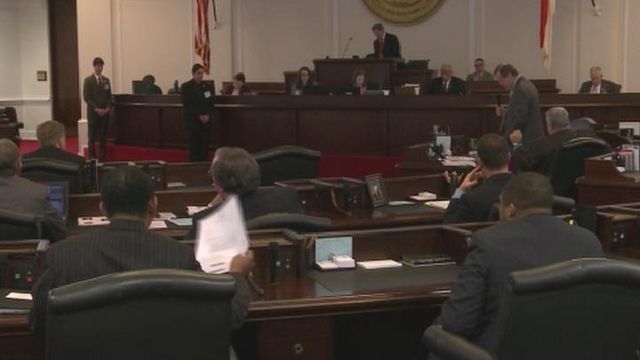
Posted — UpdatedThe Senate voted 36-13 in favor of House Bill 4 on second reading. A final vote is expected Wednesday, after which the bill would go to Gov. Pat McCrory, who has already said he will sign it into law.
The bill cuts the maximum weekly unemployment benefit from $535 to $350 and replaces 26 weeks of state-paid benefits with a sliding cap of 12 to 20 weeks, based on the health of North Carolina's economy. It also slightly raises unemployment insurance taxes on employers.
Analysts said the changes, which would take effect July 1, would help the state repay $2.5 billion to the federal government three years faster than leaving the system unchanged. North Carolina borrowed the money to pay jobless benefits during the recession when state taxes paid by employers couldn't keep up with demand for benefits.
"(The bill) tries to take care of the unemployed, but in addition to that, it doesn't put an excessive burden on the employers," said Sen. Bob Rucho, R-Mecklenburg.
Senate Republicans easily defeated a series of Democratic amendments, including one by Sen. Martin Nesbitt, D-Buncombe, that would delay the changes until next January to avoid losing federal unemployment benefits for people who have been out of work for longer than six months.
The federal benefits were extended through the end of 2013 as part of the deal Congress passed on New Year's Day to avoid the so-called "fiscal cliff," but changing the state's unemployment program automatically voids that provision of the federal law.
Acting U.S. Secretary of Labor Seth Harris criticized the measure Monday, saying North Carolina would lose an estimated $780 million in benefits over the second half of the year, devastating tens of thousands of families and denting the state's economy.
Sen. Tommy Tucker, R-Union, said he didn't initially like the bill, but as a small business owner, he believes the unemployment changes are needed.
"I almost lost my business (in the recession)," Tucker said, noting he laid off 70 of his 104 employees.
With his business recovering – employment is back to 77 – he said he will pay $110,000 in unemployment taxes this year, and he doesn't want to see that amount grow in the coming years because of the state's unpaid debt.
"I want to get this monkey off business' back as soon as possible," he said.
Nesbitt and Sen. Josh Stein, D-Wake, argued that the state has options to repay the debt by late 2015 or early 2016 without sacrificing the federal benefits, such as issuing taxpayer anticipation notes in three years.
"What we're trading is a little extra in (federal unemployment) taxes, which goes back into our own pocket in 2016 for $780 million in benefits today," Stein said. "That is economic development for 170,000 people in 2013."
As their House counterparts did last week, Senate Democrats criticized what they say as a lack of balance in the bill, saying the unemployed would be shouldering most of the cost of repaying the debt.
"We're hurting our people," said Sen. Ellie Kinnaird, D-Orange. "We helped employers when they asked for help (by cutting tax rates), and now, why aren't we helping employees?"
Other amendments that were defeated would have eliminated the sliding scale for the duration of benefits, would have included exceptions for family hardships and would have called for benefits to revert to current levels once the debt had been repaid.
Sen. Floyd McKissick, D-Durham, even withdrew an amendment that would have set the maximum weekly benefit at $442 – halfway between the current $535 and the proposed $350 – and called on workers to pay a fee to help fund the change.
"I can see the handwriting on the wall," McKissick said.

Copyright 2024 by Capitol Broadcasting Company. All rights reserved. This material may not be published, broadcast, rewritten or redistributed.