(Note: I’ve posted two BLOGS back-to- back because the last hotel did not have Internet access.)
The morning found me in better spirits, but I still passed over the bacon at breakfast. Like the others in our group, I expected Ankara would be less interesting than the other places we’d visited considering it is the capital of the country and a large, modern city that looks like many others in Europe. We soon learned we had been too quick to judge.
Our first stop was at the Mausoleum complex of Attaturk, founder of the Turkish state. It is a beautiful array of towers and buildings made mostly of limestone built in the mid-1950s, about two decades following Attaturk’s death, when the country – having recovered from WWII – had amassed the financial means needed to honor him as they wished. Our visit just happened to fall on the birthday of the country’s first prime minister and second president –Ismet Inonu – so we had the pleasure of seeing an official military ceremony where members of his family placed a wreath on his grave, which is also located in the complex.
Our next stop was the Museum of Anatolian Civilizations. Although small, the museum is packed with treasures from every period of Turkey’s rich history. I thought I’d seen really old stuff in Istanbul, but here I saw flint stones dating to 23,000 BC! That almost did me in. I mean, can you imagine? And it’s right there in front of you, separated only by glass.
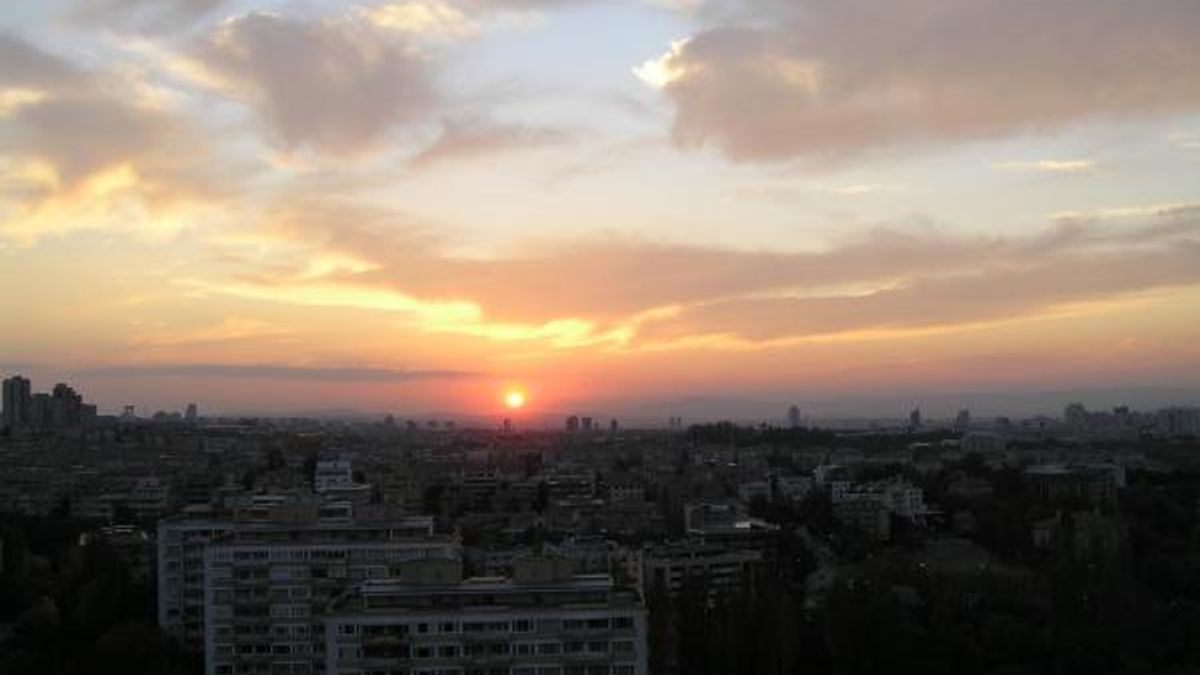
Lunch on the hill above the museum was thoroughly enjoyable. It was a traditional restaurant with panoramic views of Ankara. We feasted on salad and Turkish pizza, and were surprised to see more food coming – traditional Turkish meatballs in sauce. Few of us could do much damage to that dish. We were as stuffed as the grape leaves they bring out at every meal.
The most unexpected and enjoyable part of the day was the visit to a local university, where the student-led culture club presented performances of music and dance. These college students come from all parts of the country but share a desire to keep their many cultural traditions alive for future generations. I don’t think this is so common in the U.S., to see college students working to perform and preserve cultural traditions such as folk dancing and pottery making. Am I wrong? Thoughts?
After the performances we had the opportunity to spend another 45 minutes talking candidly with the students. Their English was good. They’ve been studying for several years and all their classes at the university are taught in English, which came as a huge surprise to us.
As we left they were calling me “Uncle Todd,” which on first pass was an endearing moniker ... until I realized that to them, I am way beyond my college years. The searing reality of truth …
We ended the day by having dinner with former Turkish Ambassador to the U.S. Dr. Faruk Logoglu and his lovely wife. Both are excellent conversationalists and put the finishing touch on our enjoyable time in Ankara.
In Ankara: Archaeology, Arts and Attaturk
null